
Fast Fire Remediation
for Industrial Equipment
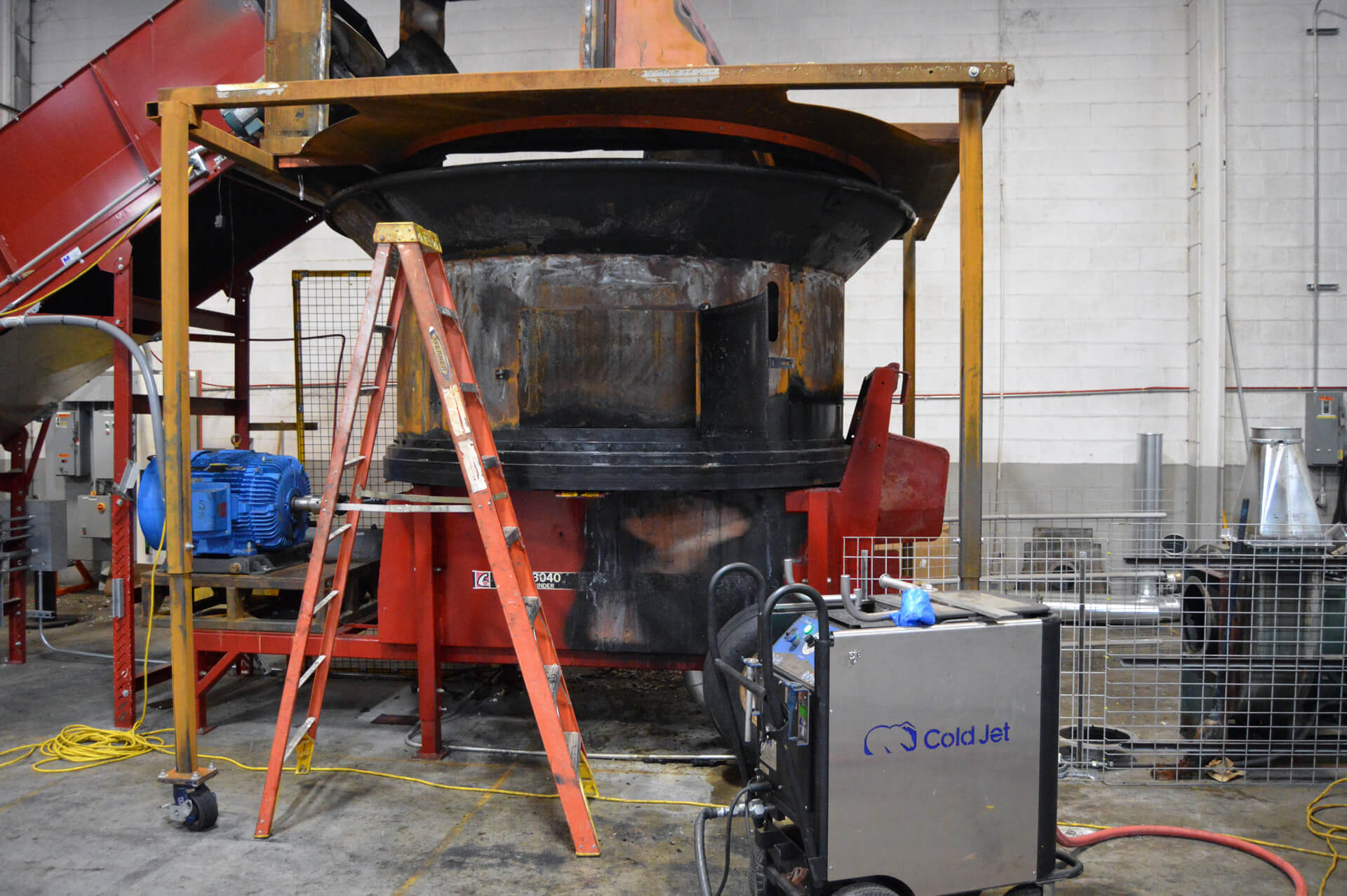
How Dry Ice Blasting Got Comfort Research Back in Production in Two Days
When a production line goes down after a fire, every hour of downtime costs money — and every hour spent guessing at the extent of the damage delays the moment you can actually start fixing it.
That’s the situation Comfort Research, the makers of Big Joe furniture, found themselves in at their Tarboro, North Carolina facility after a fire on one of their production lines.
Here’s how Merritt Industrial’s dry ice blasting team got them cleaned, assessed, and back in production fast — and why dry ice blasting has become the go-to method for fire and smoke damage cleanup on industrial equipment.
Project Overview
Comfort Research called Merritt Industrial on a Tuesday after a fire disabled one of their production lines in Tarboro, NC — roughly 3.5 hours from our shop. By Thursday, we had two fully equipped teams on-site: two technicians, two Cold Jet dry ice blasting machines, and 1,000 lbs of dry ice, ready to work.
With a production line down, Comfort Research needed two things at once: a fast, thorough cleanup of the soot and fire residue coating their equipment, and clear visibility into what was actually damaged underneath it so they could plan repairs and get back to making product. Dry ice blasting delivered both in the same pass.
The Challenge: Soot on Everything, Downtime on the Clock
Fires don’t damage just one material — they leave residue on everything in the room. On this job, that meant soot and smoke contamination across:
- concrete floors,
- wood structures,
- masonry,
- steel and aluminum equipment housings,
- and exposed wiring and electrical components.
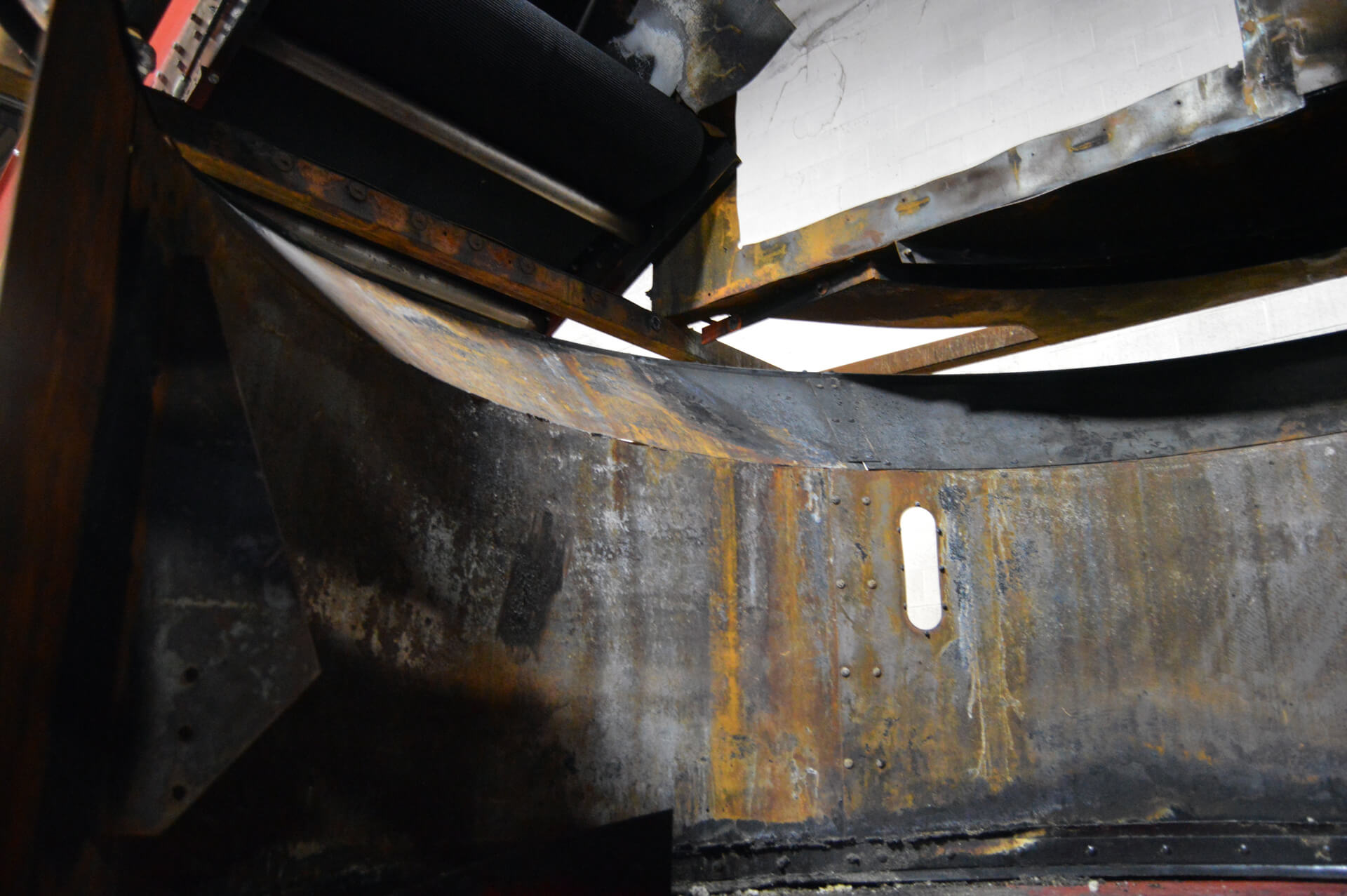
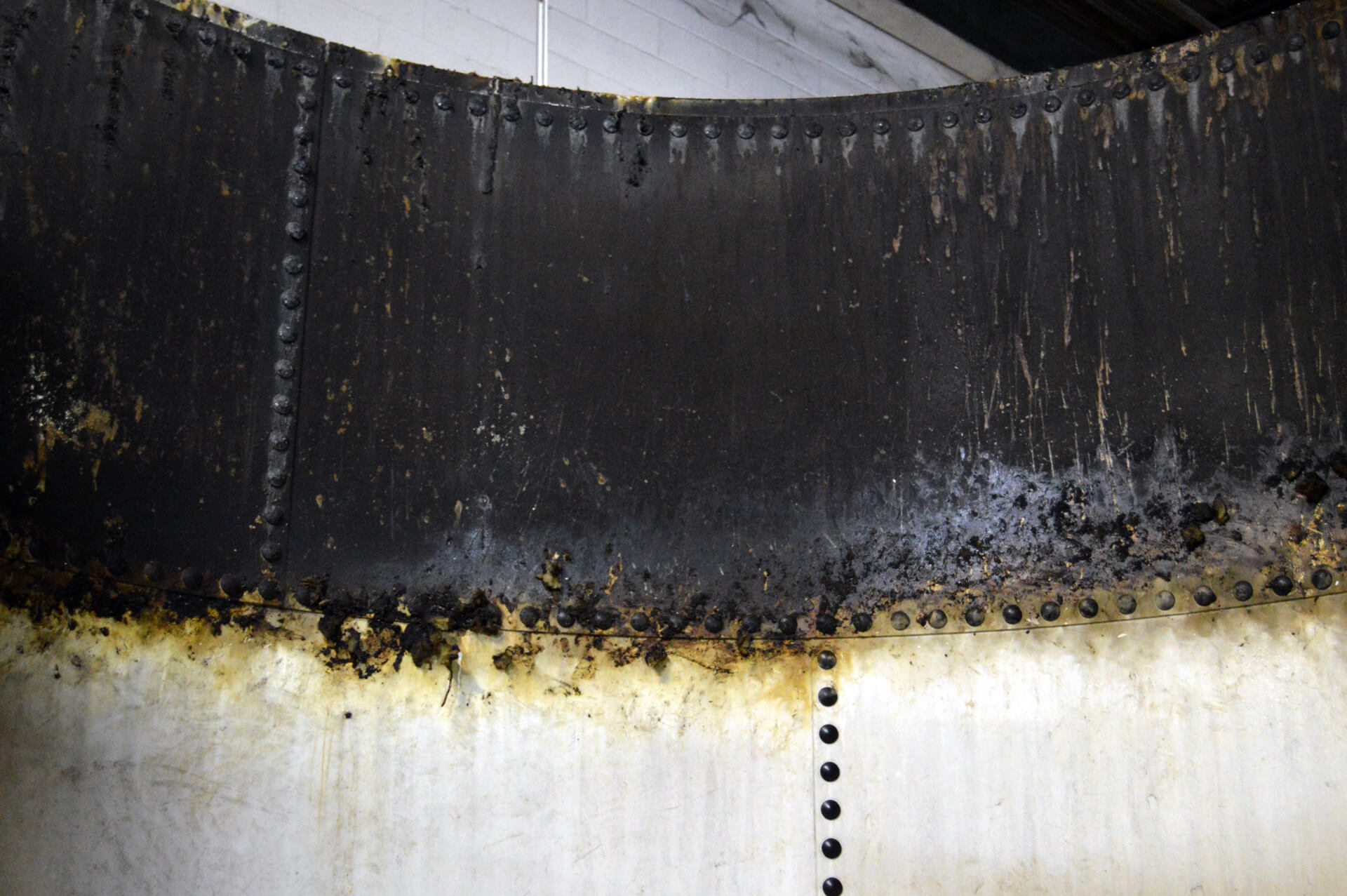
Every one of those surfaces needed to be cleaned before Comfort Research’s team could even determine what was salvageable versus what needed to be replaced.
Traditional post-fire cleanup methods — chemical degreasers, wet wiping, abrasive blasting — tend to slow this process down.
Water and chemical cleaners raise the risk of corrosion on steel components and short-term damage to electrical systems.
Abrasive media like sand or soda can etch precision surfaces and typically requires partial disassembly to clean thoroughly.
Both approaches generate secondary waste that has to be collected and disposed of before the facility is even usable again.
On a production line that’s losing revenue every hour it’s down, none of that is acceptable.
Why Dry Ice Blasting Is the Right Call for Fire Damage
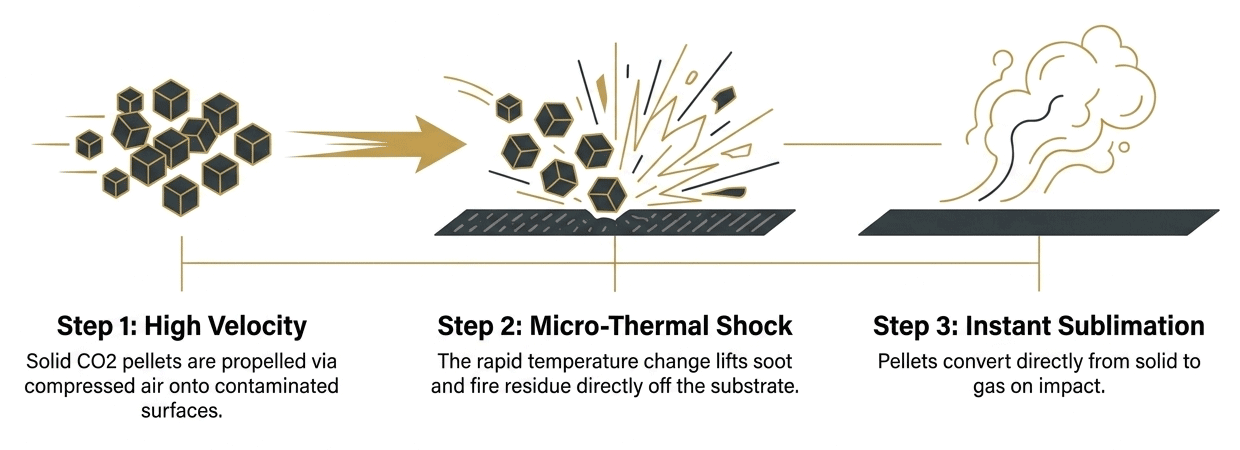
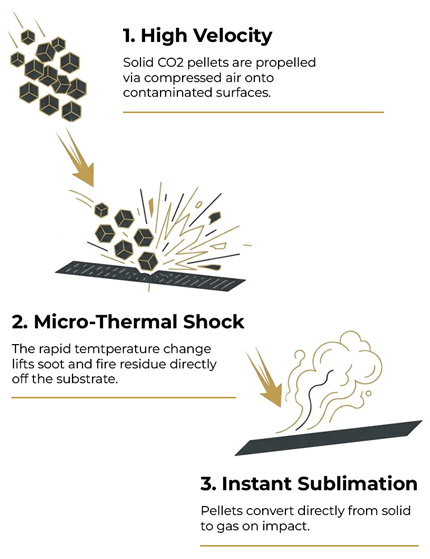
Dry ice blasting propels solid CO2 pellets at high velocity onto contaminated surfaces.
On impact, the pellets sublimate — they convert directly from solid to gas — which does two things at once: the rapid temperature change causes a micro-thermal shock that lifts soot and fire residue off the surface, and the dry ice itself simply disappears into the air.
There’s no water, no chemical solvent, and no secondary blasting media left behind to clean up.
The Mechanics of Dry Ice Blasting
Dry Ice cleaning benefits
For fire remediation specifically, Dry Ice cleaning solves the exact problems traditional methods create:

Zero secondary waste. The only thing left on the ground after a dry ice blasting job is the soot and residue that came off the equipment — no sand, no soda, no wet chemical runoff to collect and dispose of separately.
No cleaning chemicals. Nothing is applied to the surface that has to be rinsed off, neutralized, or kept away from sensitive components.
Non-conductive and safe on live equipment. Because dry ice is non-abrasive and doesn’t introduce moisture, it can be used directly on wiring, control panels, and electrical components without the corrosion or short-circuit risk that comes with water-based cleaning.

Immediate access to assess damage. Once a surface is blasted clean, it’s clean — there’s no residue film or wet surface obscuring what’s underneath. That means facility managers, insurance adjusters, and engineers can evaluate the actual condition of equipment the same day, instead of waiting on a multi-step cleaning and drying process.

Odor removal at the source. Smoke odor doesn’t come from the air — it comes from soot particles that have embedded themselves into porous materials like wood, concrete, and masonry, where they continue to off-gas. Dry ice blasting physically removes those particles rather than masking them with fragrance, which is why it eliminates the smell instead of just covering it up temporarily.
The Merritt Difference: Our Redundancy Guarantee
A lot of companies offer dry ice blasting. What we’ve built our reputation on is showing up ready to actually finish the job fast — not stretch it out.
Every fire remediation job we take on gets a minimum of two technicians and two Cold Jet blasting machines on-site, as standard. We call it our redundancy guarantee, and on a job like Comfort Research’s, it’s the difference between a crew working through a facility one section at a time and two crews covering twice the ground in the same shift. In practice, that makes us roughly twice as efficient as single-tech, single-machine competitors — and because we’re not billing by the day for a job that could be done in hours, we’re frequently more affordable too, even with two full crews on-site.
Our focus is on timely, quality results — not dragging a job out because a slower pace is more profitable. For a client like Comfort Research, that meant a fire-damaged production line went from “unable to run” to “cleaned and assessable” in a matter of days, not weeks.
Dry Ice Blasting in Action (video)
Full-Facility, Multi-Surface Capability
Dry Ice Blasting for Equipment, Structural Surfaces, and Electrical Components
Industrial fires rarely stay contained to one material, and neither does the cleanup. Merritt Industrial’s dry ice blasting handles the full range of surfaces found on a typical production floor:
- Concrete flooring and structural elements
- Wood framing and structures
- Masonry and block walls
- Steel and aluminum equipment housings and framework
- Wiring, control panels, and other electrical components
That range matters because it means one crew, one process, and one mobilization can clean an entire affected area — instead of coordinating separate vendors for different surfaces and materials.
Results
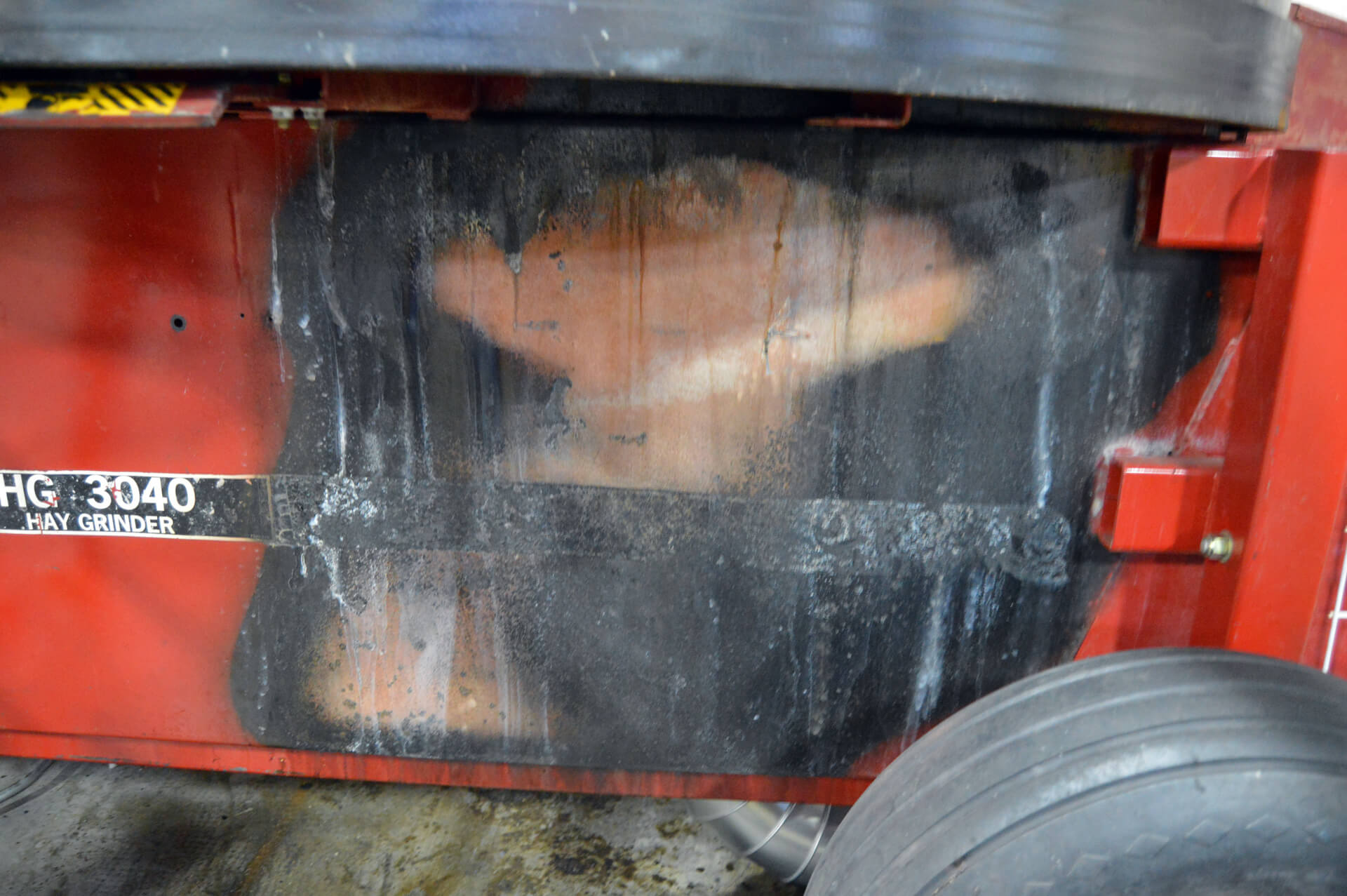
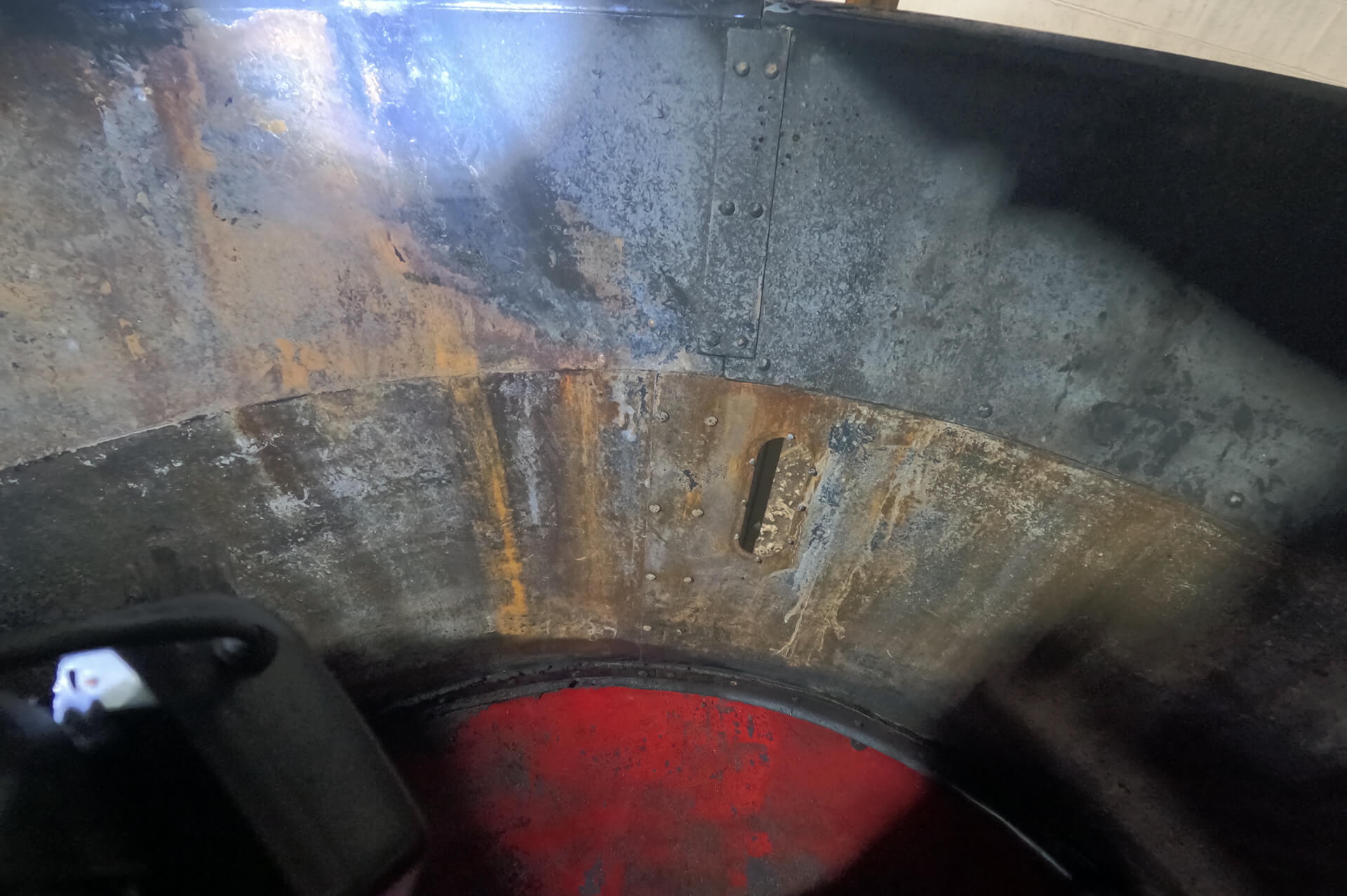
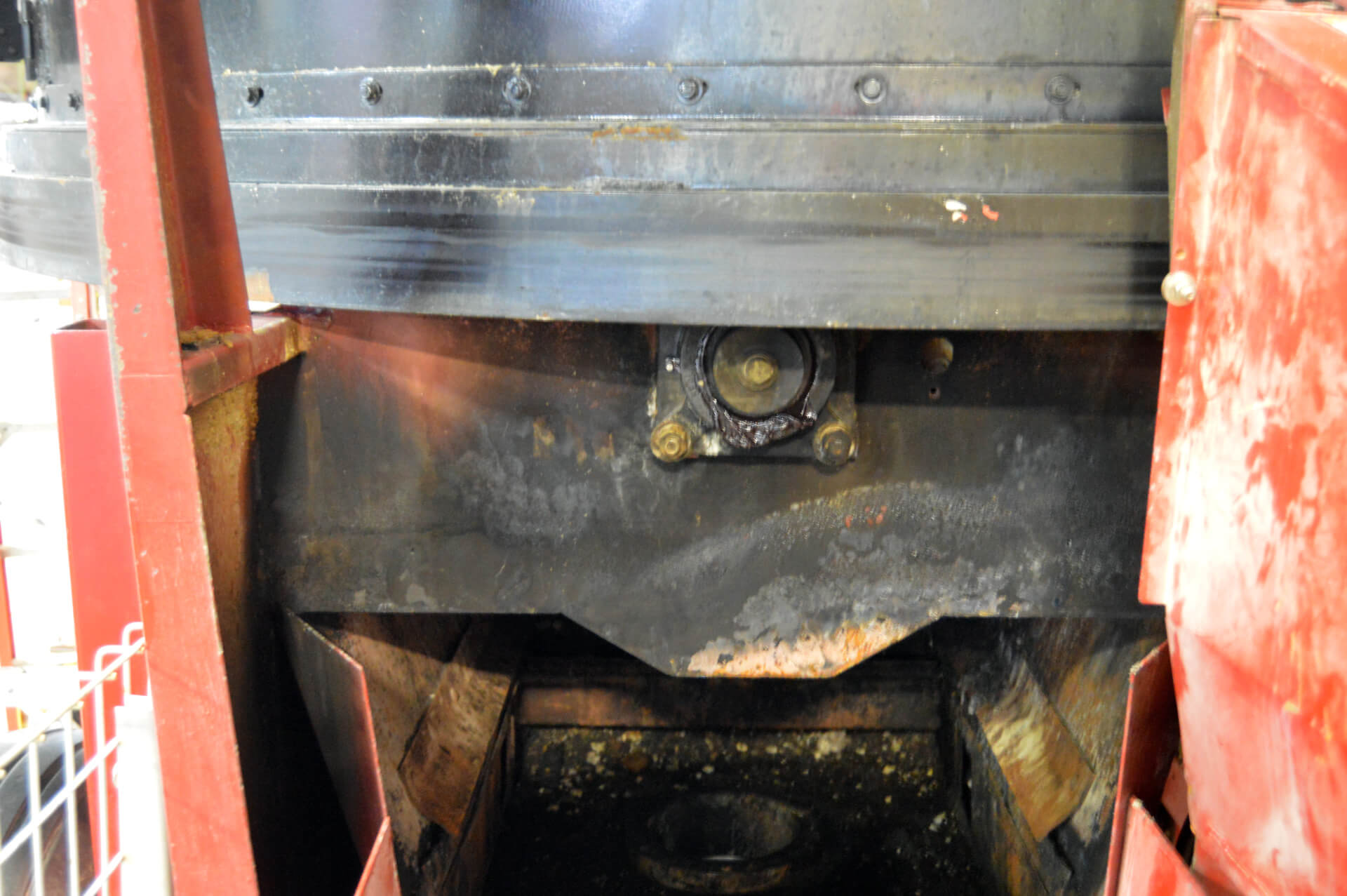
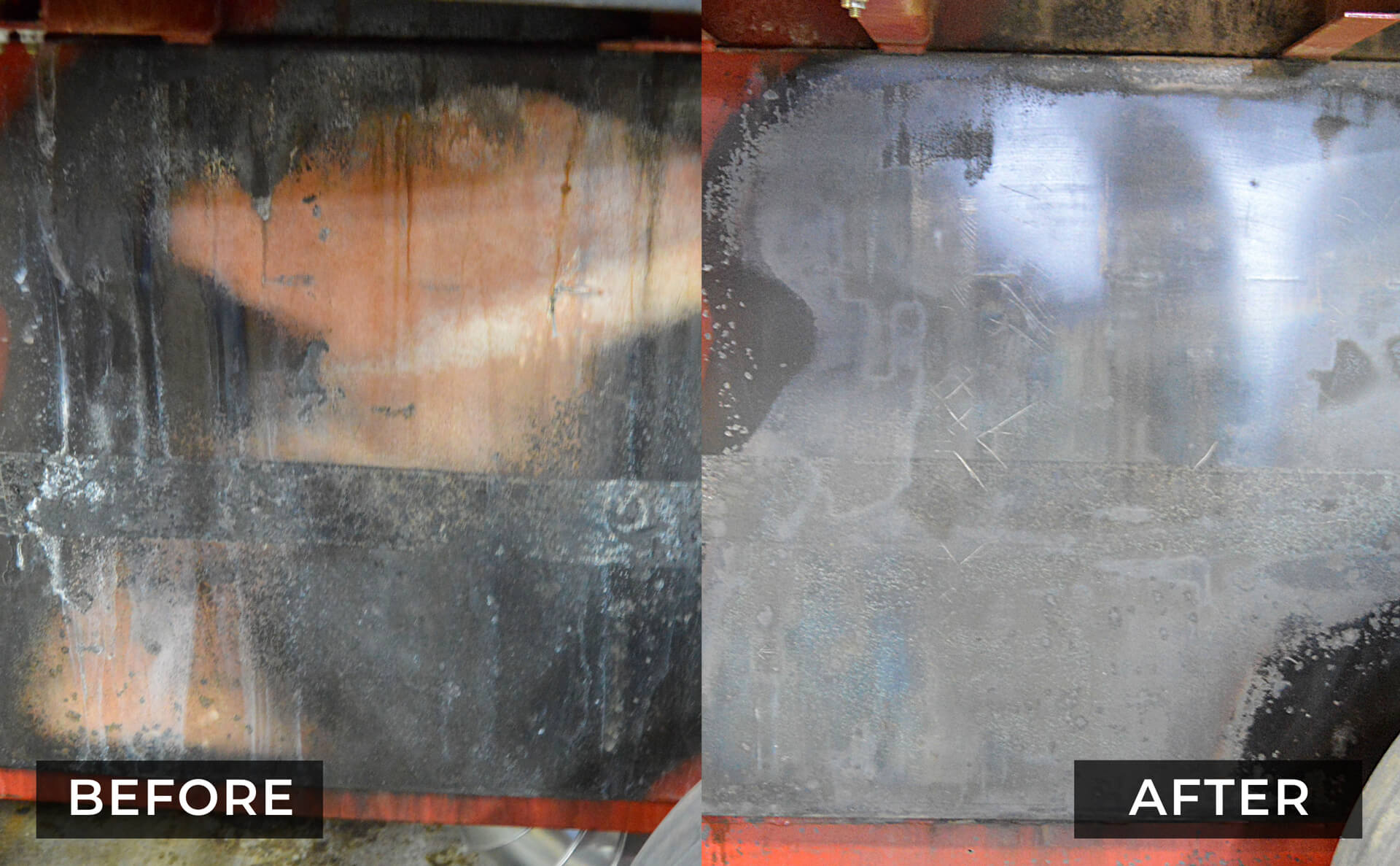
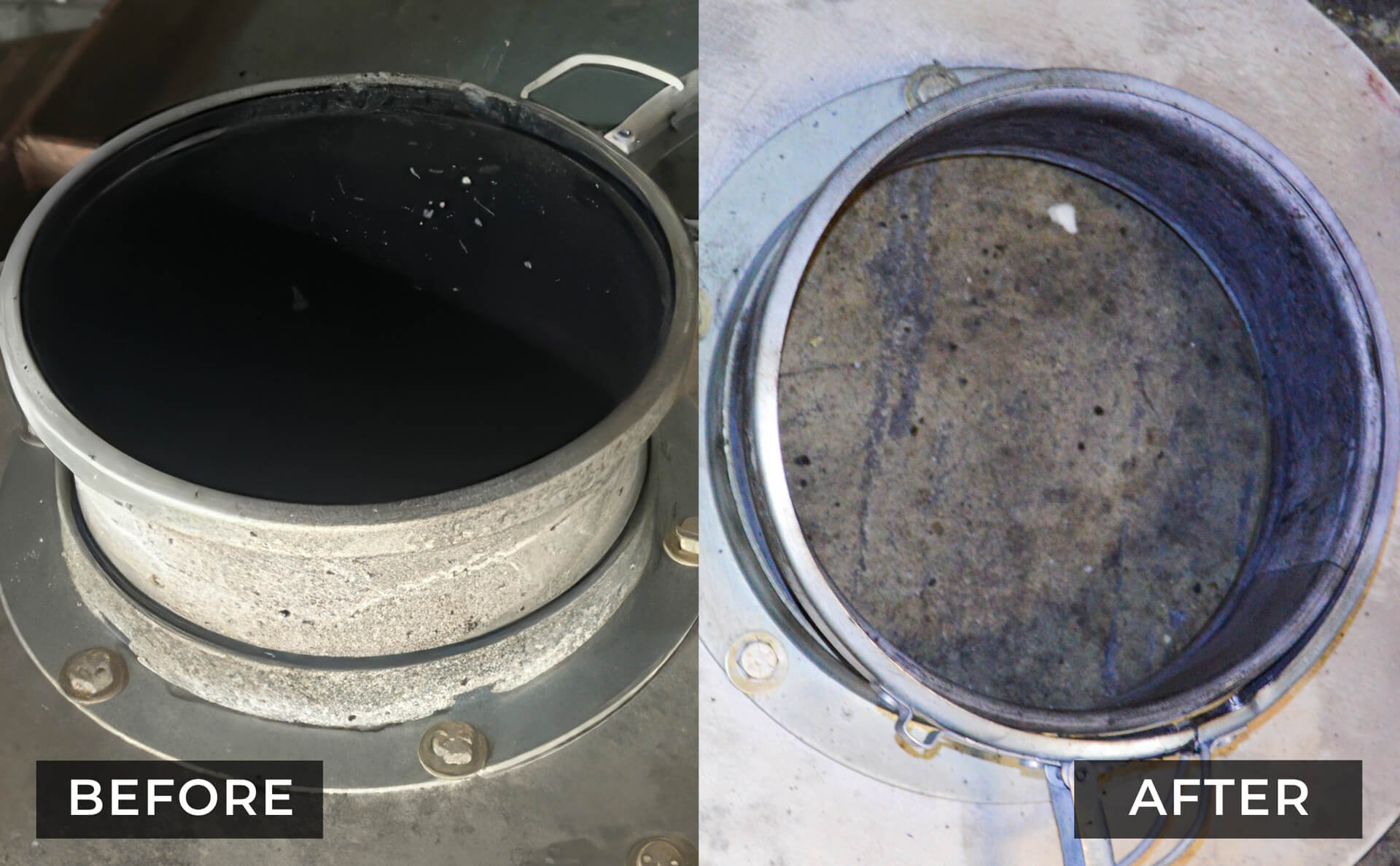
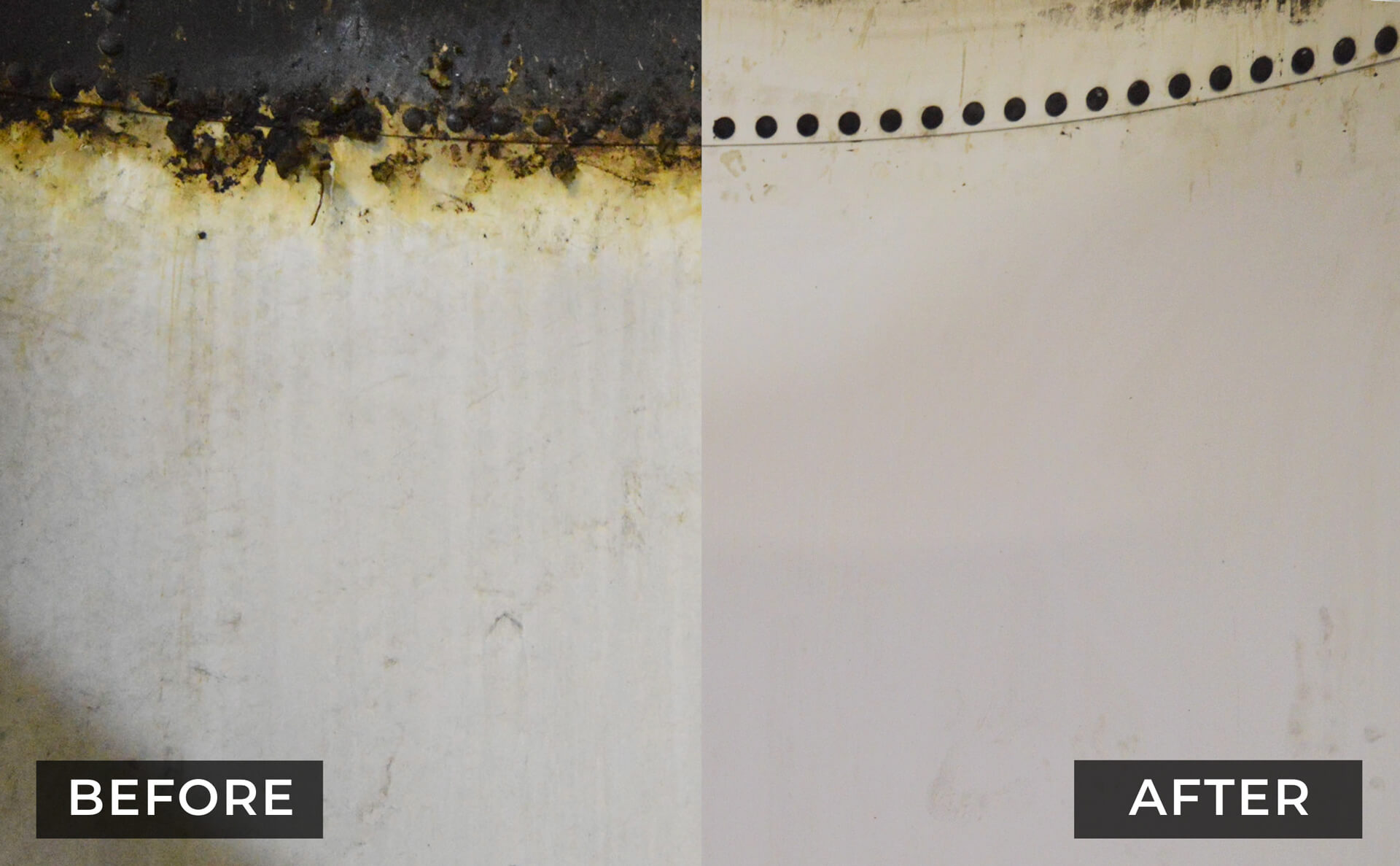
After Dry Ice cleaning, soot-covered equipment and tank surfaces were exposed again for inspection. The work removed the fire residue that had been obscuring the underlying paint, metal, seams, and other surface details across the affected equipment.
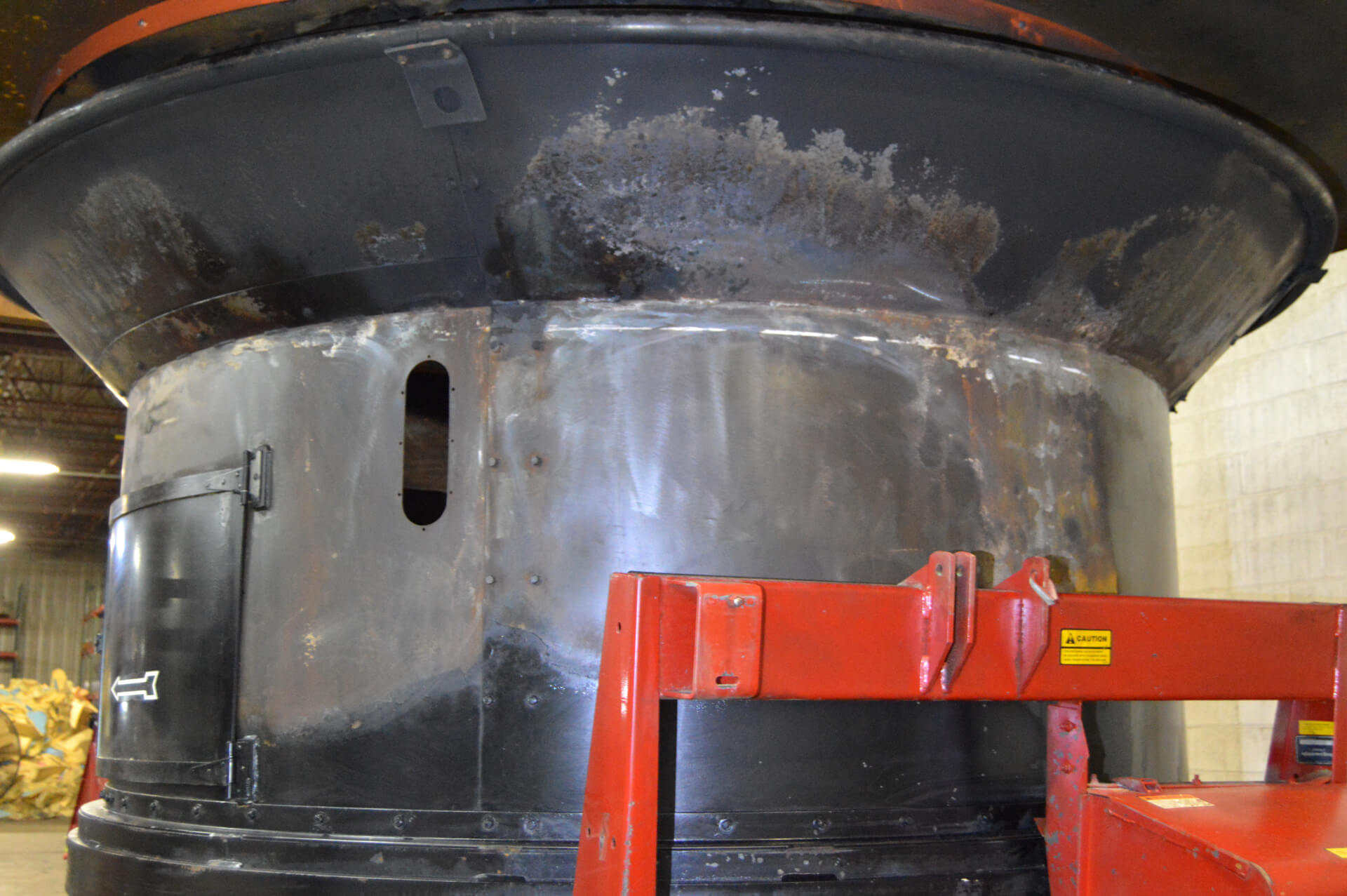
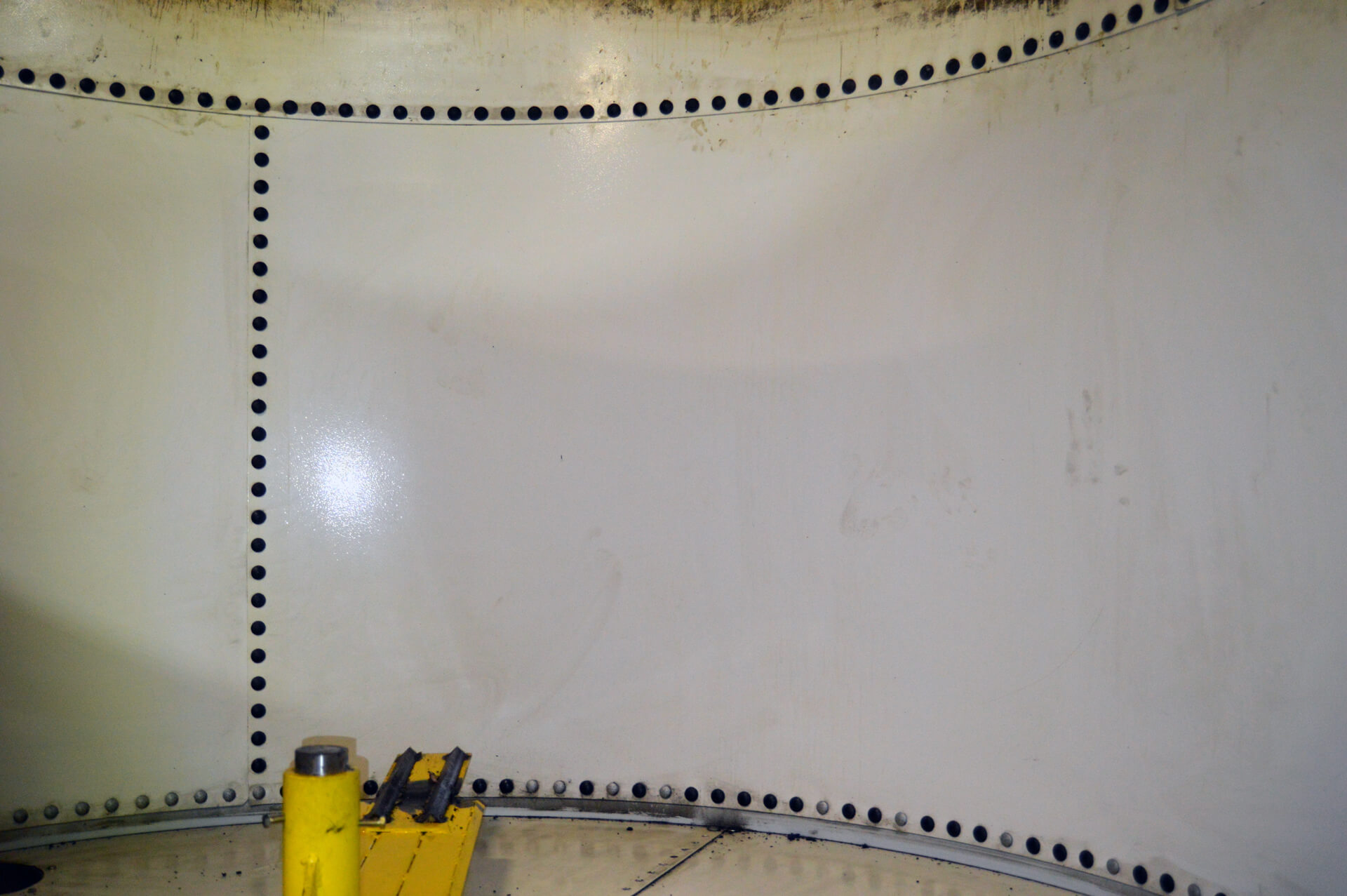
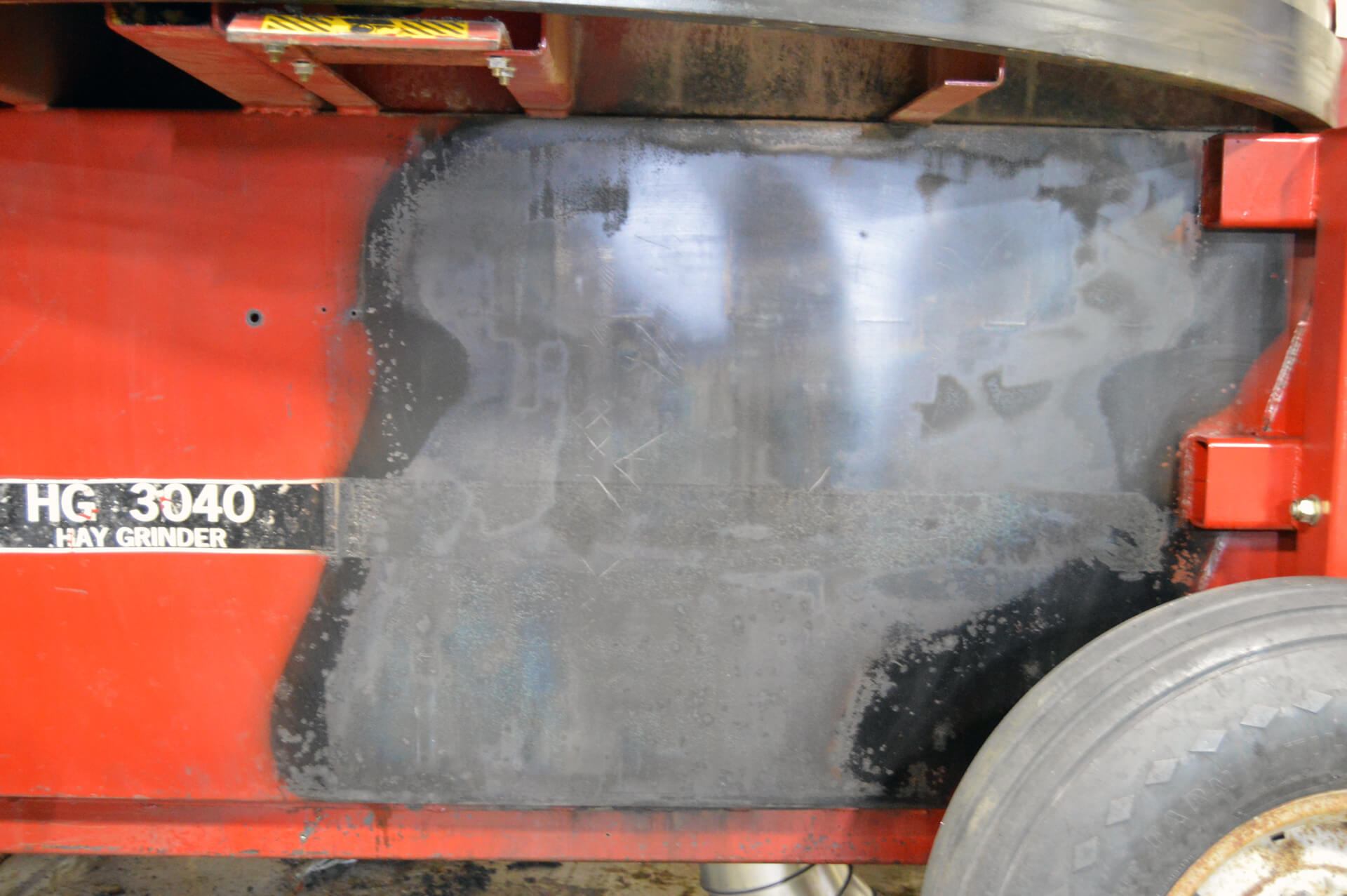
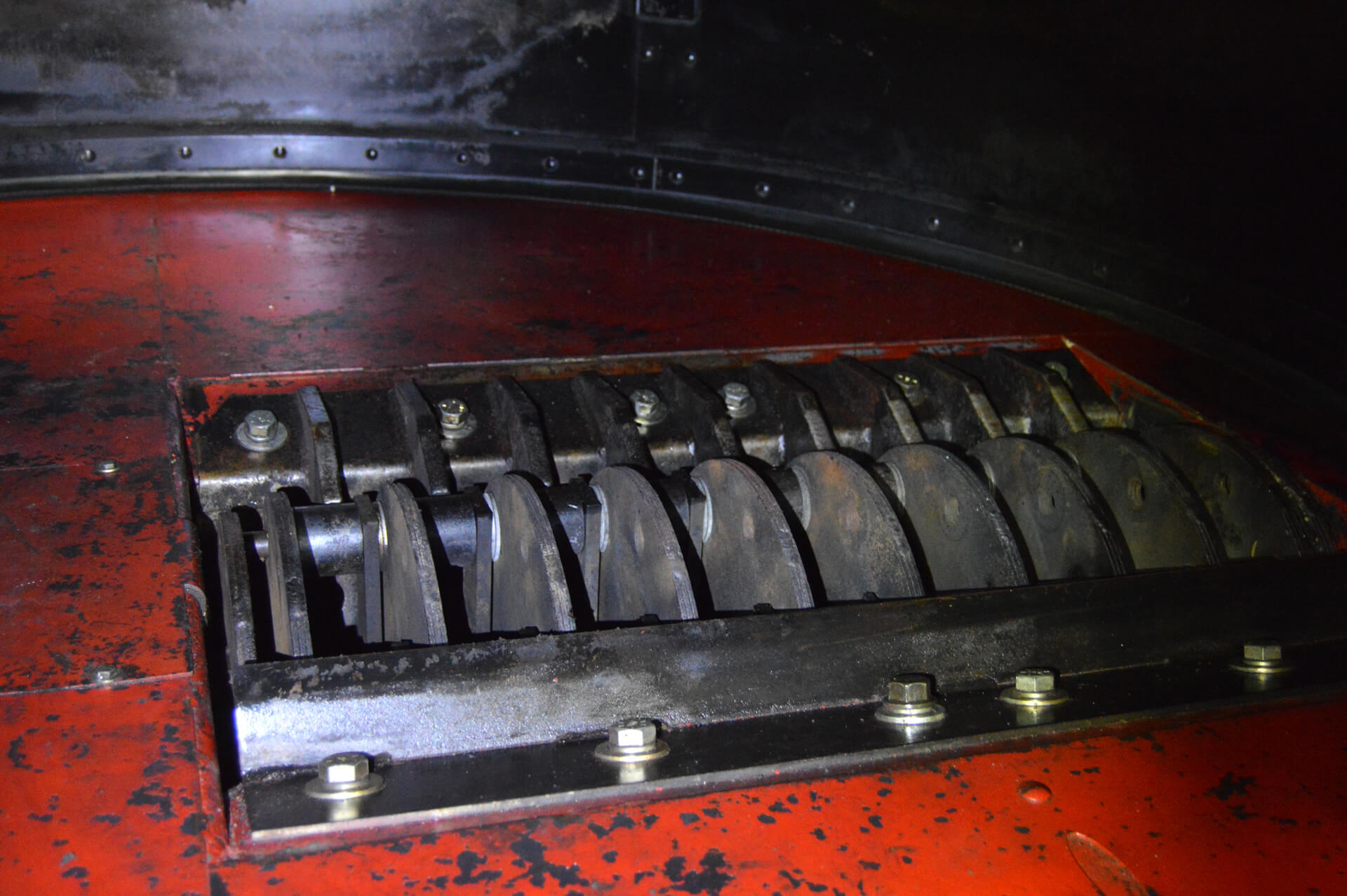
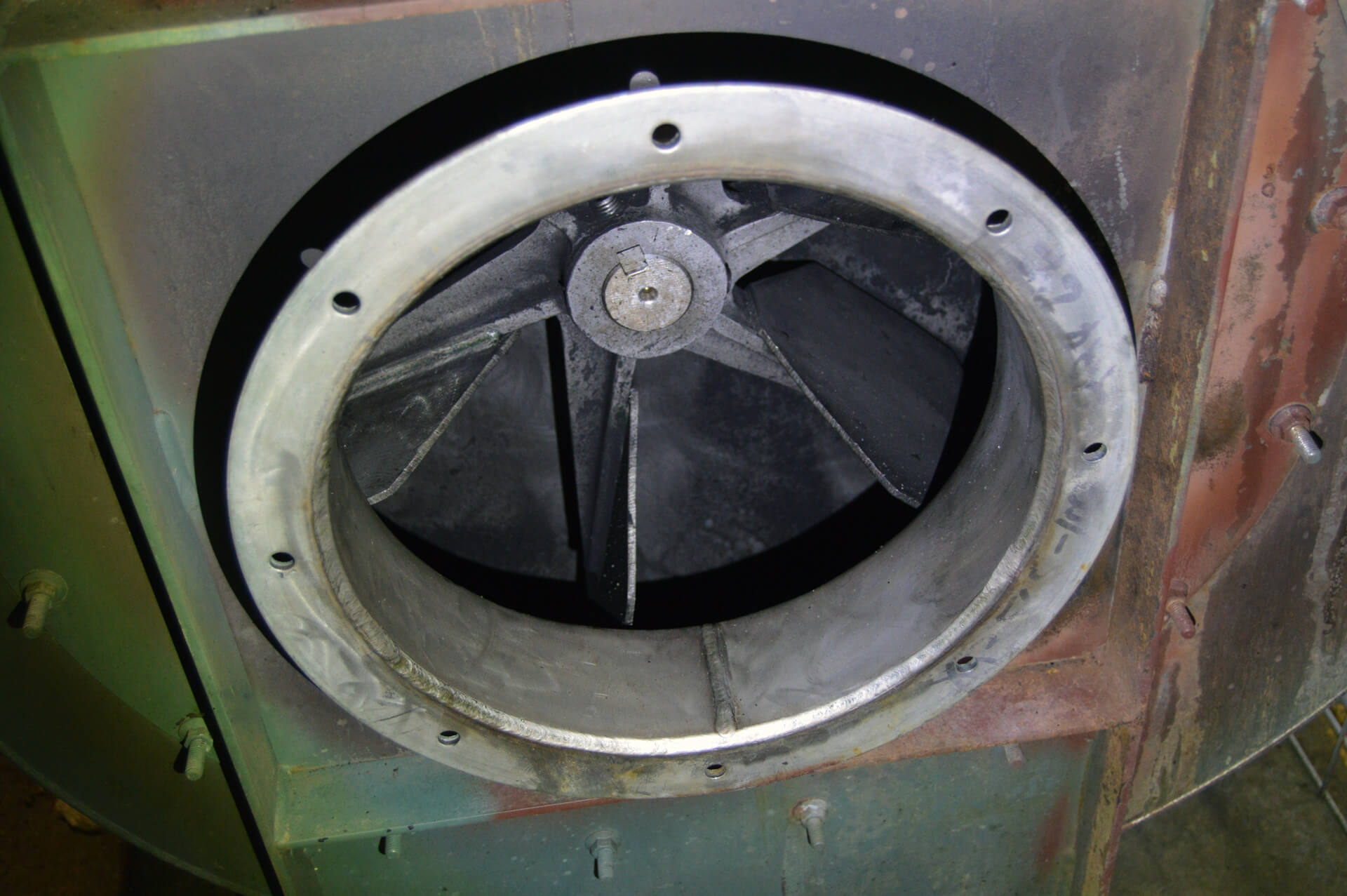
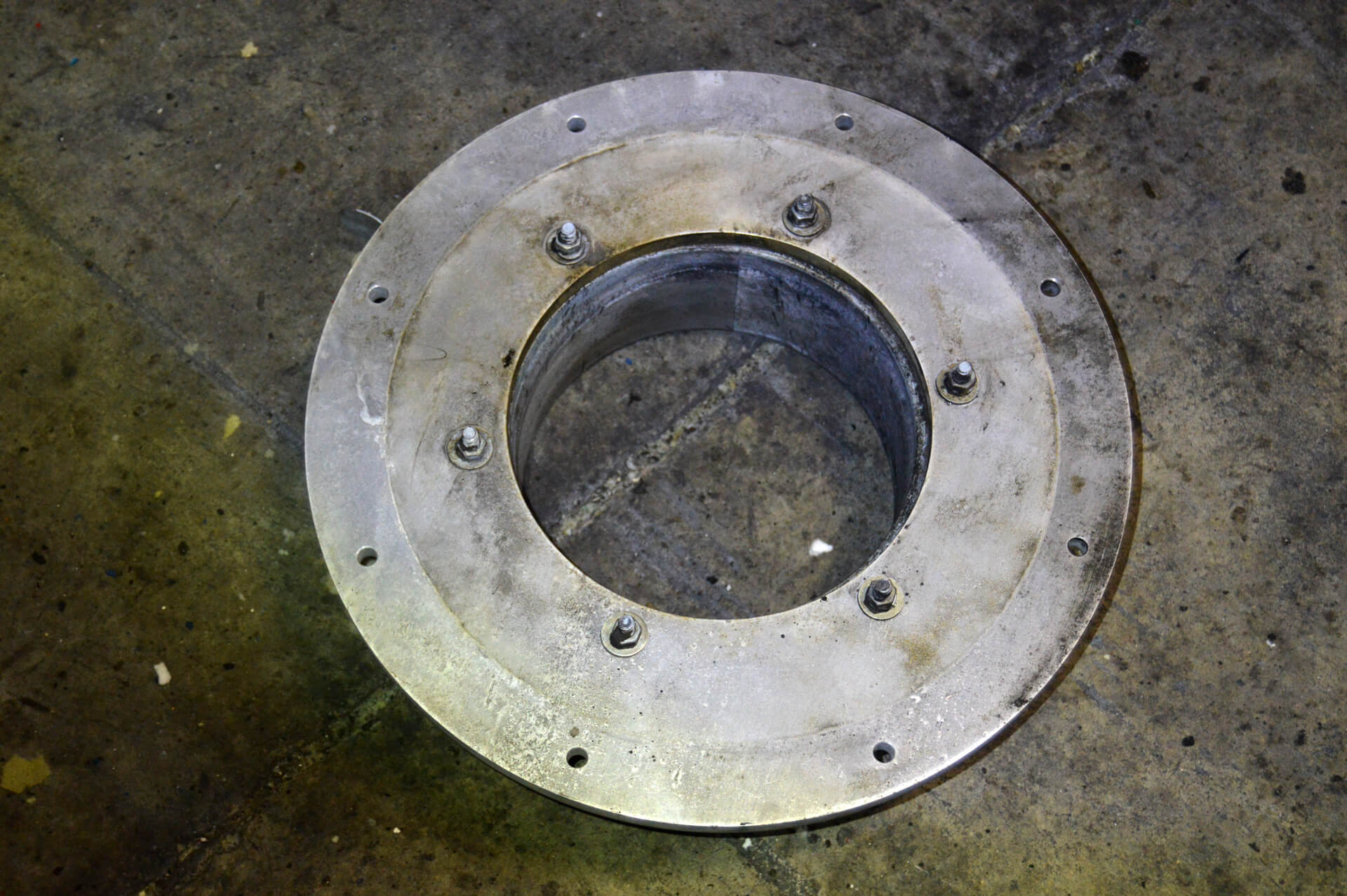
Before and After Dry Ice Blasting
Removing the soot didn’t make the equipment new—it revealed what was actually underneath.
These before-and-after views show the surface condition before cleaning and what became visible once the fire residue was removed.
Dry Ice Blasting vs. Traditional Fire Cleanup Methods
| Dry Ice Blasting | Chemical / Wet Cleaning | Abrasive Blasting (Sand/Soda) | |
| Secondary waste | None — media sublimates | Chemical runoff to collect and dispose of | Spent media to collect and dispose of |
| Safe on electrical components | Yes — non-conductive, no moisture | Risk of corrosion, short circuits | Generally not recommended |
| Surface damage risk | Non-abrasive on most substrates | Low, but can leave chemical residue | Can etch or pit precision surfaces |
| Disassembly required | Rarely — cleans in place | Often, to protect sensitive parts | Often |
| Odor removal | Removes soot at the source | Often masks odor rather than removing it | Removes soot, but slower and more labor-intensive |
| Typical turnaround | Fast — hours to a few days | Slower — drying and neutralization time | Slower — setup, containment, cleanup |
Conclusion
Industrial fire remediation isn’t just about making equipment look clean again.
The Comfort Research project is a good example of what matters most after an industrial fire: getting the contamination off quickly so the real condition of the equipment can be seen and the next decisions can be made.
Dry ice blasting gave the team a way to remove heavy soot from equipment, structural surfaces, and sensitive components without adding water, chemicals, or another layer of blasting media to clean up afterward.
Merritt Industrial, with two technicians and two Dry Ice machines on-site, helped Comfort Research move from a disabled production line to cleaned equipment ready for assessment and the next stage of recovery in a matter of days—not weeks.
Frequently Asked Questions
Dry ice blasting uses compressed air to propel solid CO₂ pellets at contaminated surfaces. The combination of particle impact and rapid cooling helps loosen soot and fire residue, while the dry ice sublimates from solid directly into gas. The process adds no water, chemical solvent, or mineral blast media to the surface.
Dry ice blasting does not introduce liquid water or conductive abrasive media, which can make it useful for cleaning around certain wiring, control panels, motors, and other electrical components. The equipment condition, component type, and site safety requirements still determine how the work is performed and whether equipment must be de-energized.
Dry ice blasting can help reduce smoke odor by physically removing the soot and fire residue that contribute to the odor rather than simply masking it with fragrance. The final result depends on where contamination has penetrated and whether other fire-damaged materials remain.
Response time depends on the project scope and location. On the Comfort Research project, the initial call came on Tuesday and Merritt had two technicians, two Cold Jet dry ice blasting machines, and 1,000 lbs of dry ice on-site by Thursday.
On industrial fire-remediation projects, dry ice blasting can be used on many different surfaces and equipment types. At Comfort Research, the affected area included concrete, wood, masonry, steel and aluminum equipment, along with wiring and electrical components. The appropriate cleaning approach still depends on the substrate, contamination, and condition of the equipment.
The dry ice itself sublimates into CO₂ gas, so no added blast media remains after cleaning. The soot, fire residue, and other contamination removed from the surface still remain and must be collected or managed appropriately.
Requirements vary by insurer and by claim. Merritt can work with facility managers, engineers, and insurance adjusters to document the cleaning process and expose underlying equipment conditions for assessment.
Cost depends on the amount of contamination, equipment geometry, access, mobilization, cleanup requirements, and project schedule. Merritt’s use of multiple technicians and machines can allow different areas to be cleaned in parallel, reducing elapsed cleanup time on suitable projects. The actual cost advantage depends on the specific job.
Merritt serves industrial and manufacturing facilities throughout North Carolina and South Carolina and can take on regional projects beyond that area when the project warrants it. Comfort Research’s Tarboro, North Carolina facility was roughly 3.5 hours from Merritt’s shop.
Dry ice blasting does not introduce a water-based drying step, so cleaned areas can be inspected as soon as the cleaning work is complete. Actual production restart depends on the condition revealed underneath, any repairs that are required, inspections, and the facility’s own safety and operating requirements.
Need Fire Damage Cleanup for Your Facility?
If a fire has taken one of your production lines offline, every day spent waiting on cleanup is a day of lost output. Merritt Industrial’s dry ice blasting teams deploy in force — two technicians, two machines, every time — to get your facility cleaned, assessed, and back in operation as fast as possible.
Phone: (704) 325-9811
Email: info@merrittindustrial.com