

Paint Booth Cleaning in Charlotte, NC
Dry Ice Blasting for
Collision Centers & Auto Body Shops
A paint booth is only as good as its last cleaning.
Overspray builds up gradually — on the walls, the light lenses, the filter media, the floor grates, accessory part hangers — and by the time it’s visibly affecting finish quality or airflow, it’s already been costing you money for weeks.
Merritt Industrial’s dry ice blasting service gives collision centers and auto body shops throughout the Charlotte, NC region a faster, cleaner way to maintain their paint booths, with a scheduled cleaning program built around minimal downtime — and a protective coating option that makes every cleaning after the first one even faster.
At Merritt, we don’t use water or chemicals, only eco-friendly cleaning methods.
Why Paint Booth Buildup
Is a Bigger Problem Than It Looks
Overspray doesn’t stay contained to the panel being painted. It settles everywhere — walls, ceiling panels, light fixtures, intake and exhaust filters, floor grates, ductwork — and every bit of it works against you in three specific ways.
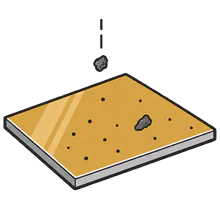
It degrades finish quality
Buildup on filters and ventilation screens restricts airflow, which changes how a booth cures and disperses overspray. Loose, dried overspray flaking off ceiling panels or fixtures is a common source of dirt-in-paint defects and rework — the kind of comeback that costs far more than the cleaning would have.
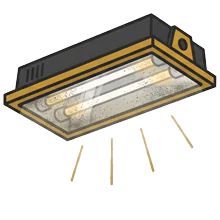
It reduces visibility
Overspray coating light lenses dims a booth’s actual output over time, even though the fixtures themselves are working fine. Painters end up matching color and checking for defects under worse lighting than the booth was designed to provide.

It’s a documented fire code concern
NFPA 33, the standard governing spray application using flammable and combustible materials, requires that spray area interior surfaces be designed to prevent residue from trapping and to “facilitate ventilation and cleaning” (Section 5.1.1), and specifically calls for surfaces — especially floors — to be cleaned regularly to minimize the accumulation of combustible residue in booths using elevated-temperature drying (Section 13.3.1.1), which describes the bake-cycle booths most collision centers run.
Buildup isn’t just a cosmetic issue — it’s the exact material the code is written to keep off your walls.
Why Dry Ice Blasting
Is the Better Way to Clean a Paint Booth
Dry ice blasting propels solid CO2 pellets at the contaminated surface. On impact, the pellets sublimate — converting directly from solid to gas — and the resulting thermal shock lifts overspray and dried paint film off the surface underneath. Nothing is left behind but the residue that came off the booth.
For paint booth cleaning specifically, that translates into a handful of advantages that traditional cleaning methods can’t match:

Non-abrasive on booth surfaces
Light lenses, filter housings, and painted panel surfaces get cleaned without being scoured or scratched the way solvent scrubbing or abrasive pads can leave them.

Non-conductive and non-sparking
In an environment built around flammable coatings and solvents, that’s not a minor detail — it’s a real safety advantage over methods that introduce grit or static risk.

No secondary waste
There’s no spent media, no chemical stripper, and no rinse water to collect and dispose of. What comes off the booth is what you’re cleaning up — nothing else.

No drying time
Because nothing wet or residual is applied to the surface, the booth can go back into service the moment blasting is finished — no waiting on solvents to evaporate or surfaces to dry.

Cleans in place
Light fixtures, filter housings, and fan assemblies don’t need to be disassembled first, which is one of the biggest time sinks in a manual or chemical cleaning.
The time savings compound: one documented industrial case study cutting over to dry ice blasting for booth cleaning saw cleaning time drop by 60% compared to their prior method — which is the difference between a booth being down for a day versus a shift.
Contact us today for a free evaluation
Let Merritt find the right solution for your projects with a free onsite estimate.
Our trained technicians are ready for the job. Call today to speak to a qualified professional who understands your needs and our technology.
Protecting the Clean
Paint Booth Wax-Based Protective Coating
A clean paint booth doesn’t stay clean — overspray starts rebuilding the moment the booth goes back into service.
That’s the problem our optional protective coating is built to solve.
Once we’ve fully cleaned a booth with dry ice blasting, we can apply a clear, wax-based protective coating to the walls and other interior surfaces. New overspray lands on top of that coating layer instead of bonding directly to the substrate underneath.
The next time the booth needs attention, that buildup wipes or peels away in a fraction of the time a full cleaning would take — because you’re removing overspray from the coating, not from the booth itself.
The Math of Scheduled Cleaning
For a shop on a routine cleaning schedule, the wax-based protective coating changes the math on every visit after the first:
- full dry ice blasting handles the deep, periodic clean;
- the protective coating helps keep surfaces cleaner between deep cleans;
- the booth looks cleaner longer;
- cleaning visits in between can be faster and less expensive.
How Our Wax-Based Protective Coating Works
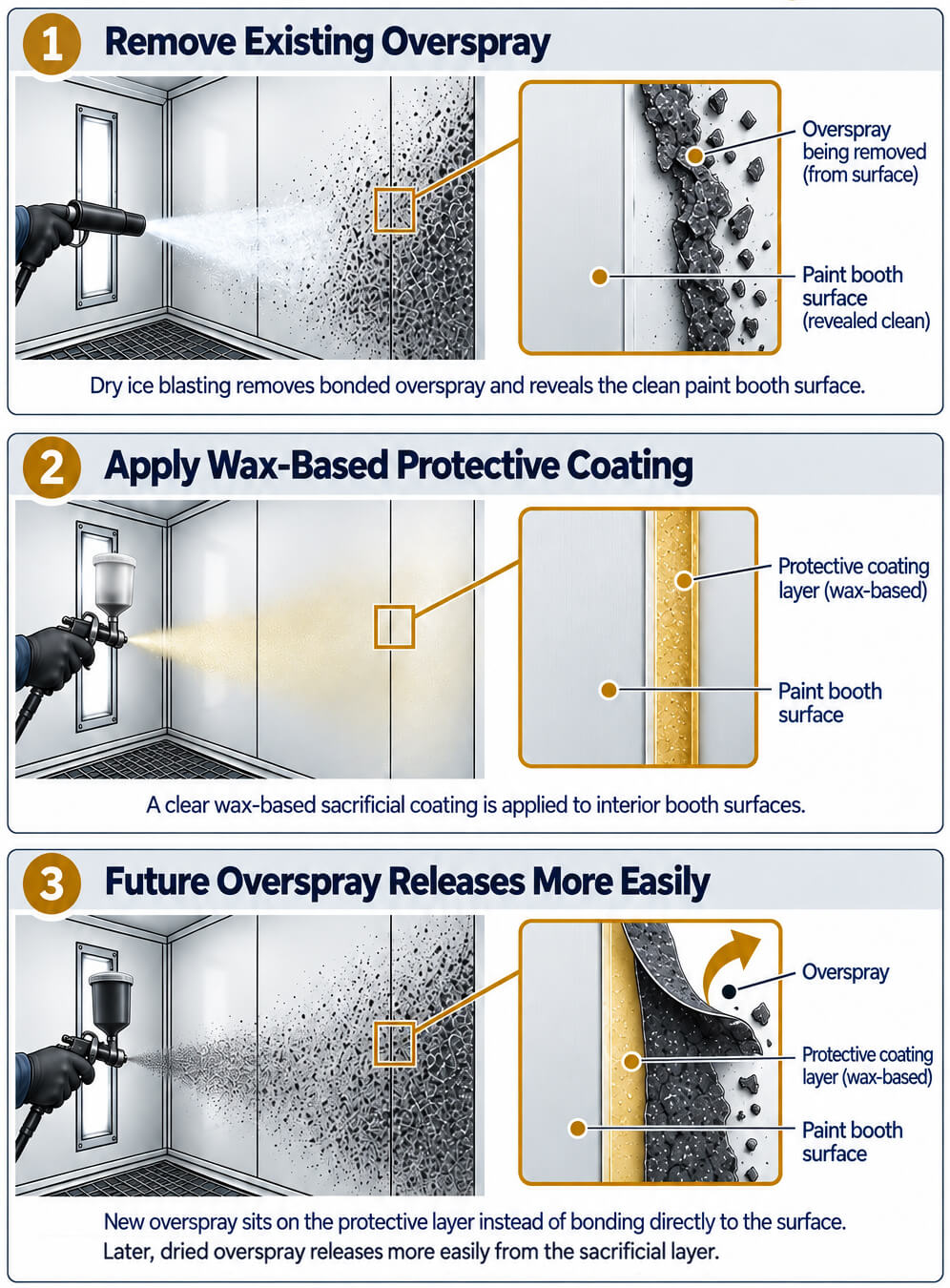
Helps make future paint booth maintenance faster and easier
Built for Routine Maintenance: Scheduled Cleaning Contracts
A paint booth that only gets cleaned when it’s visibly a problem is a paint booth that’s already been underperforming for weeks.
We offer scheduled cleaning contracts built around your shop’s actual production calendar — quarterly, semi-annual, or whatever cadence matches your booth’s overspray load — so cleaning happens on a predictable schedule instead of as an emergency call when finish quality starts slipping.
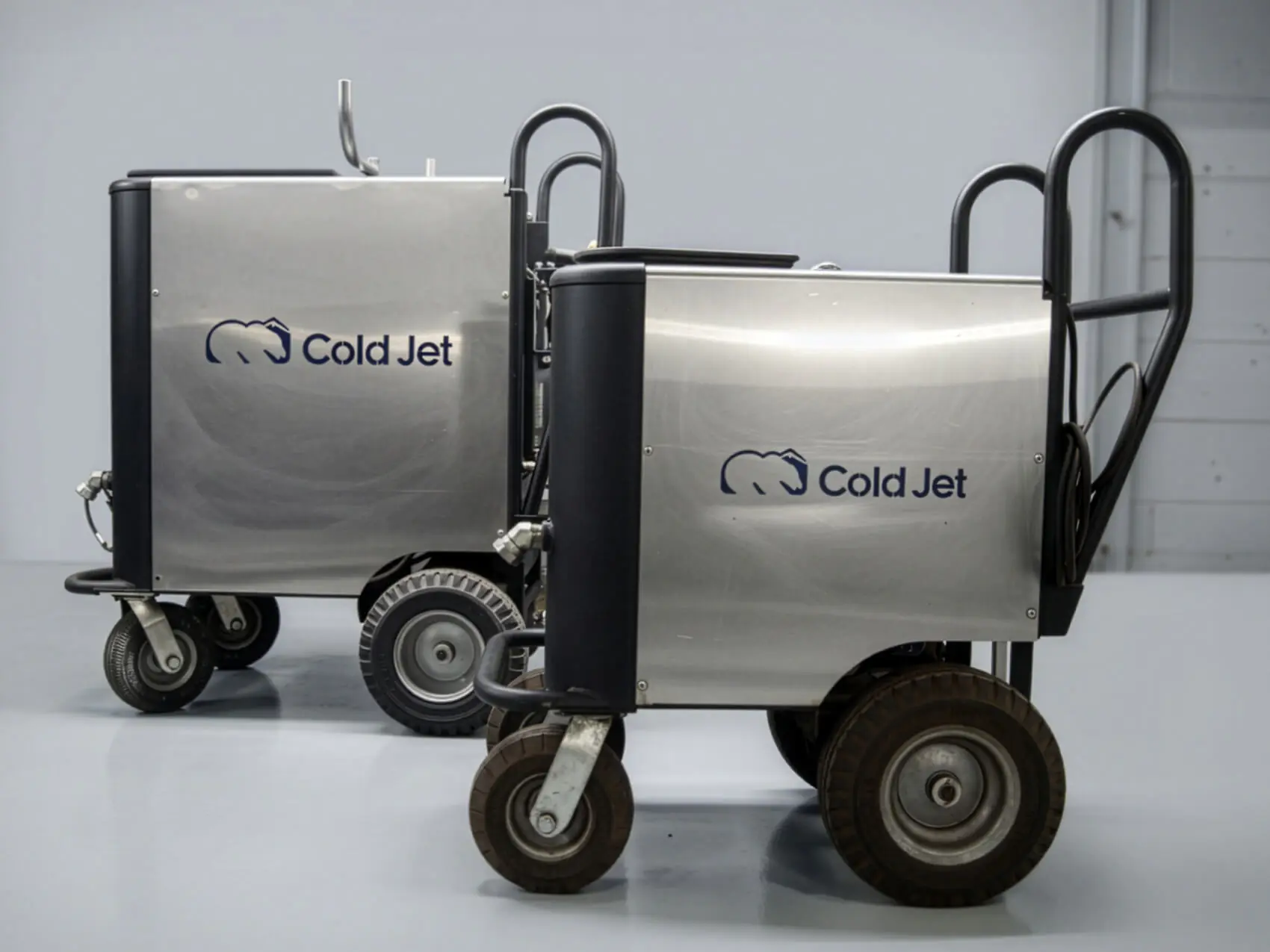
Every job, scheduled or otherwise, gets our standard redundancy guarantee: a minimum of two technicians and two Cold Jet dry ice blasting machines on every visit. That means your booth is down for one shift, not several — scheduled cleaning shouldn’t cost you more production time than the buildup it’s preventing.
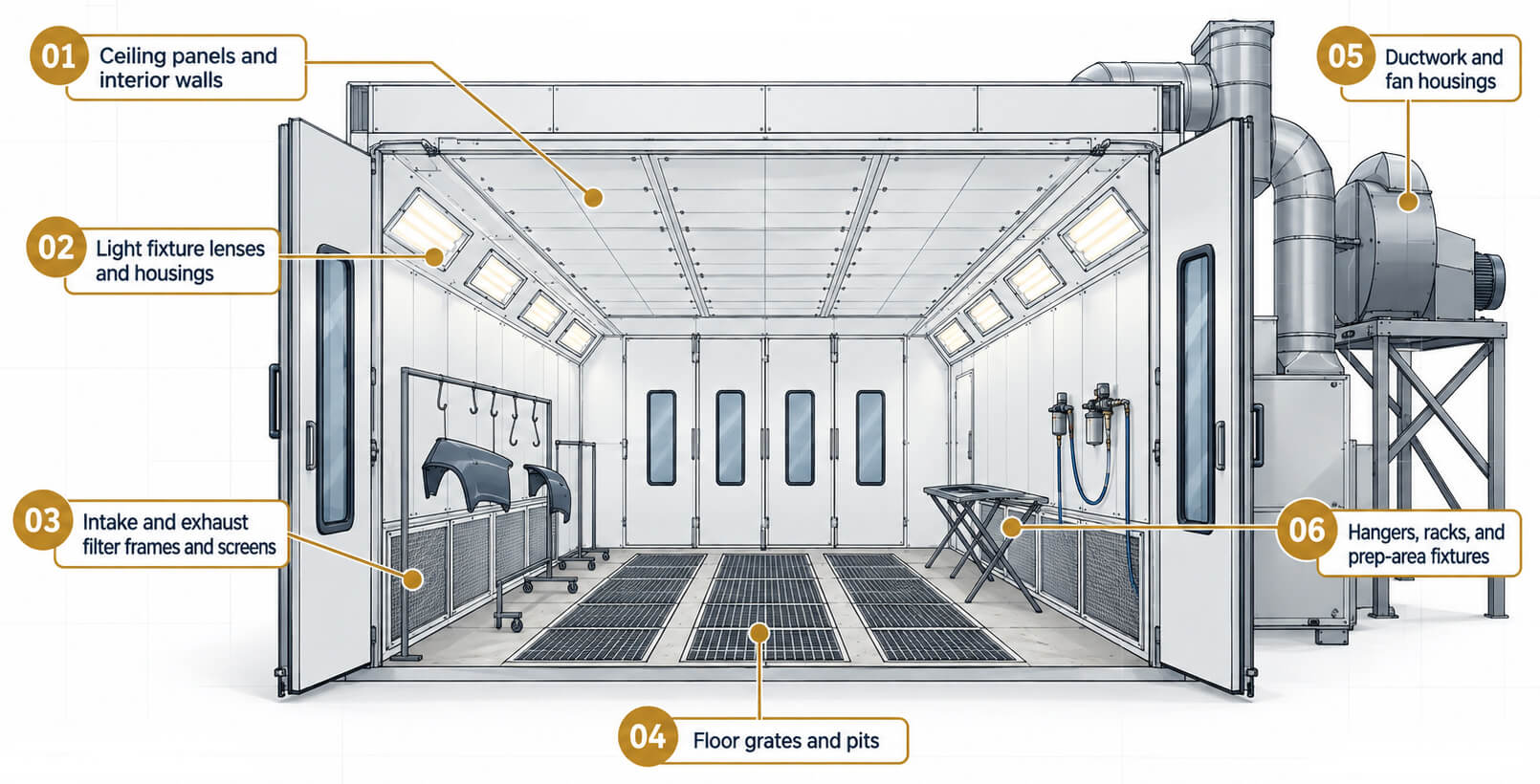
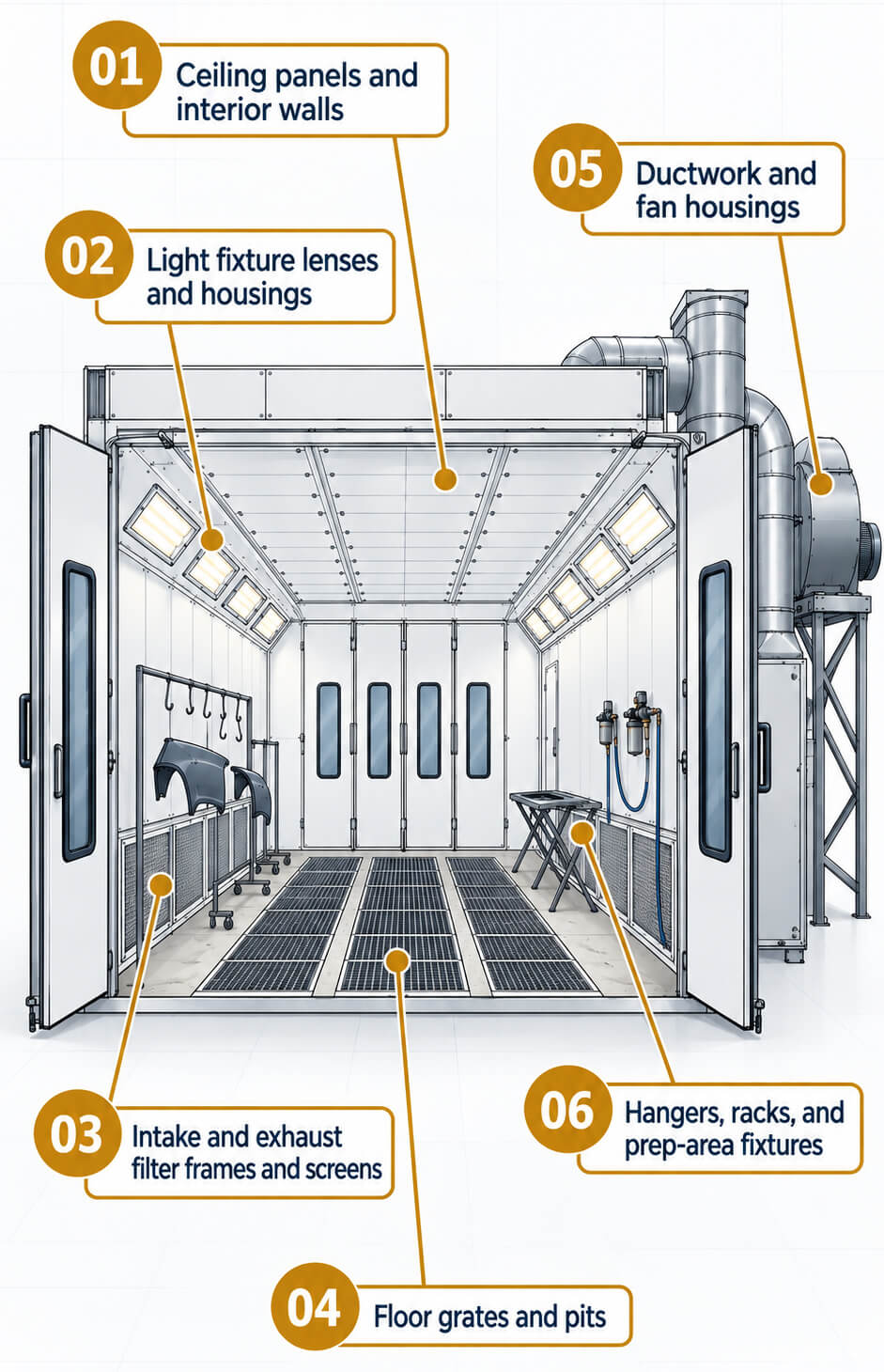
What Full-Booth Cleaning Covers
One mobilization covers the entire booth, not just the easy-to-reach panels:
- Interior walls and ceiling panels
- Light fixture lenses and housings
- Intake and exhaust filter frames and screens
- Floor grates and pits
- Ductwork and fan housings
- Hangers, racks, and prep-area fixtures
Six Areas Included in Full-Booth Cleaning
Serving Collision Centers & Auto Body Shops
in Charlotte, NC
Merritt Industrial provides dry ice blasting for collision repair centers, auto body shops, and industrial paint operations throughout Charlotte and the surrounding North Carolina and South Carolina region.
Whether it’s a one-time deep clean before an OEM certification inspection or a standing maintenance contract to keep a high-volume booth running at full performance year-round, our two-technician, two-machine crews are built to get in, get the job done, and get your booth back in production fast.
Dry Ice Blasting vs. Traditional
Paint Booth Cleaning Methods
| Dry Ice Blasting | Chemical / Solvent Stripping | Manual Scraping | |
|---|---|---|---|
| Secondary waste | None — media sublimates | Chemical runoff to collect and dispose of | Scraped debris to collect and dispose of |
| Safe on lights & electrical | Yes — non-conductive, non-sparking | Risk around fixtures and wiring | Risk of physical damage to fixtures |
| Downtime / drying time | None — booth usable immediately | Solvent evaporation and ventilation time | None, but far slower per surface |
| Surface damage risk | Non-abrasive | Can degrade panel coatings over repeated use | High — scratches panels and lenses |
| Disassembly required | Rarely — cleans in place | Often, to protect fixtures | Often, for full access |
| Typical time to clean a full booth | Fastest — hours | Slower — solvent dwell and rinse time | Slowest — labor-intensive by hand |
Frequently Asked Questions
About Dry Ice Paint Booth Cleaning
Dry ice blasting uses compressed air to propel solid CO2 pellets at a contaminated surface. The pellets sublimate on impact, and the resulting thermal shock lifts overspray and dried paint film off booth walls, filters, lights, and other surfaces without water, chemicals, or abrasive media.
Yes. The process is non-conductive and non-sparking, and doesn’t introduce moisture or grit, which makes it safe to use directly on light fixtures, filter housings, and other electrical components without disassembly.
It depends on production volume and the materials being sprayed, but most shops see noticeable overspray buildup affecting airflow or lighting within a few months of heavy use. A scheduled cleaning contract — typically quarterly or semi-annual — keeps buildup from reaching the point where it affects finish quality.
No. Dry ice blasting is non-abrasive on the surfaces found in a typical paint booth, which is part of why it’s preferred over methods like sanding, scraping, or aggressive chemical stripping that can degrade panel coatings and light lenses over repeated use.
It’s a clear coating applied to booth walls and interior surfaces after a full dry ice blasting clean. New overspray builds up on the coating rather than bonding to the substrate, so future cleanings are a faster wipe-down or peel instead of a full blasting job.
Because dry ice blasting leaves no residue, chemical film, or moisture behind, the booth can go back into production as soon as blasting is finished — typically within hours for a standard job, not days.
NFPA 33 requires spray booth interiors — particularly in booths with elevated-temperature drying — to be cleaned regularly to minimize the accumulation of combustible residue. Dry ice blasting removes that residue thoroughly without introducing flammable solvents into the process.
Yes. We work with shops to set up recurring cleaning schedules based on their production volume, so booth maintenance happens proactively rather than as a reactive emergency call.
We serve collision centers, auto body shops, and industrial paint operations throughout Charlotte, NC and the broader North Carolina and South Carolina region.
A properly cleaned booth means better airflow through filters, brighter true-color lighting, and no loose overspray flaking onto fresh paint — all of which reduce the kind of contamination-related rework that eats into a shop’s margins.
Keep Your Paint Booth
Production-Ready
A dirty paint booth is lost production time, inconsistent finish quality, and a fire code liability sitting in plain sight.
Merritt Industrial’s dry ice blasting service gets your booth fully clean without downtime, chemicals, or disassembly — and our protective coating option keeps it looking that way longer between visits.
Let Merritt Industrial save you time and keep your equipment in production.
Call us at (704) 325-9811 or email info@merrittindustrial.com to talk through a one-time deep clean or set up a scheduled maintenance contract for your facility.