
Stainless Steel Filter
Cleaning & Restoration
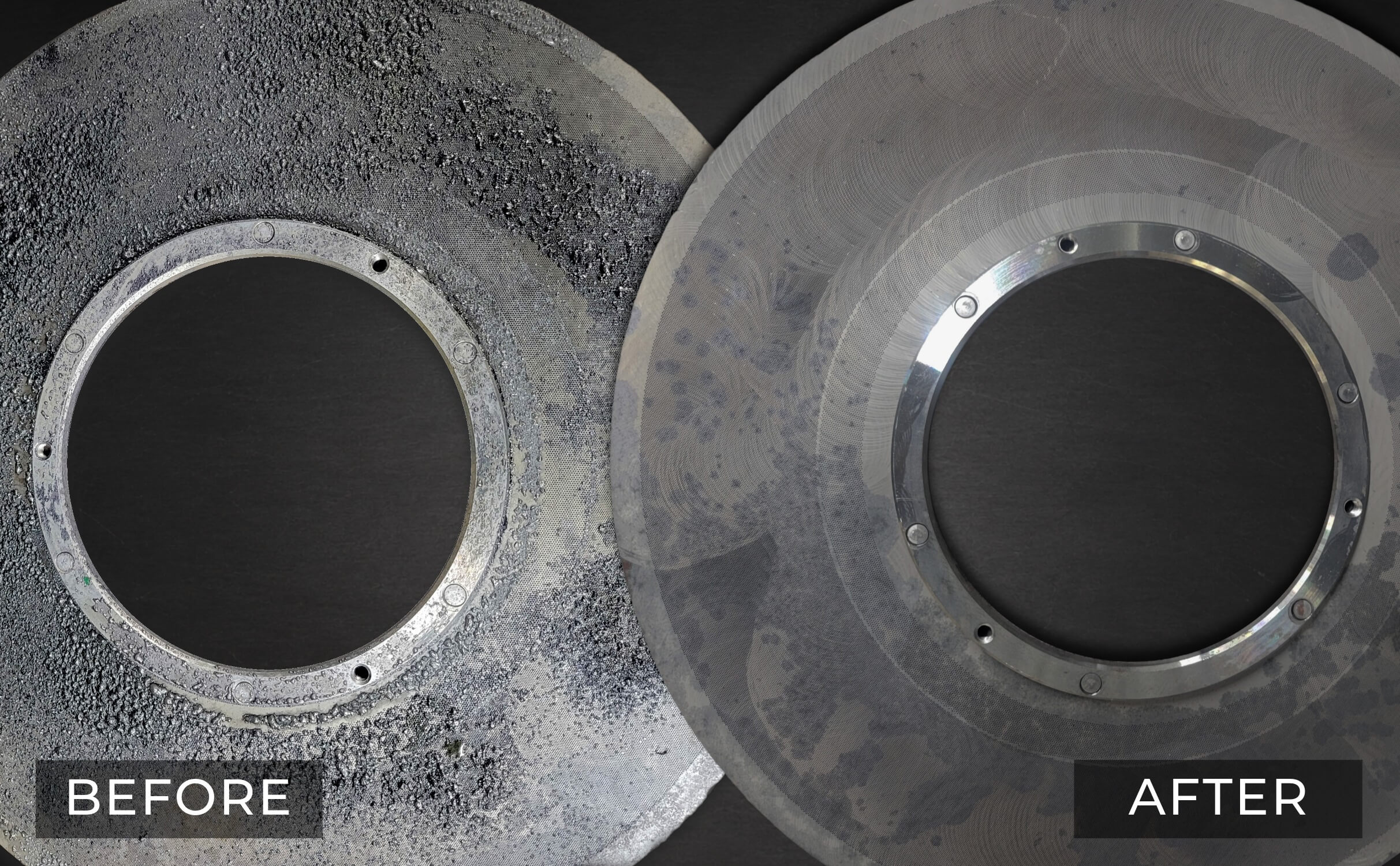
Project Overview
Merritt Industrial was engaged by Innovative Recycling Solutions to evaluate and clean 10 stainless steel filter assemblies exhibiting surface corrosion and contamination. The objective was to remove visible rust contamination while preserving the integrity of the filter media and supporting structure.
Each filter was individually inspected upon receipt to assess contamination levels, surface condition, and overall cleanability prior to processing.
The Contamination Challenge
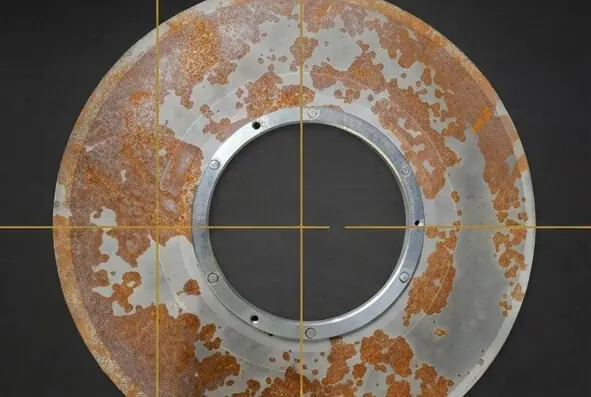
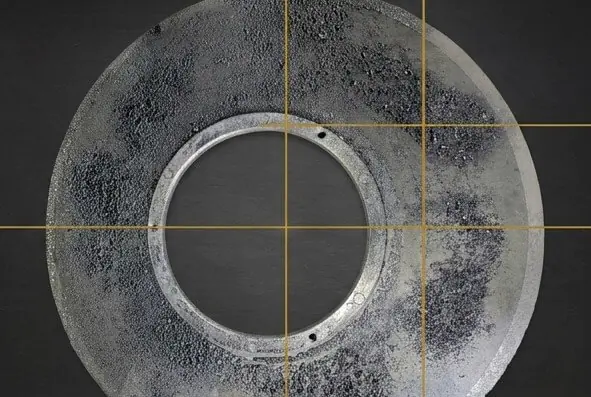
The core engineering challenge was removing tightly adhered contamination without compromising the sensitive, micro-perforated stainless-steel substrate.
Cleaning Process
To achieve the desired cleaning results while minimizing the risk of damage to the filter media, Merritt Industrial utilized a combination of precision laser cleaning and dry ice blasting.
STAGE 1: Precision Laser Cleaning
The filters were initially processed using Merritt Industrial’s 1,000-watt pulsed laser cleaning system operating at approximately 700 watts.
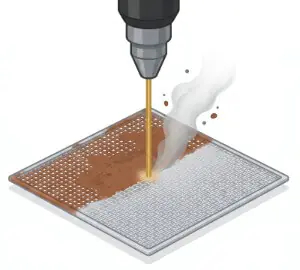
Pulsed laser cleaning works by directing short bursts of concentrated light energy onto surface contaminants.
Rust, oxidation, and other surface contamination absorb the laser energy differently than the underlying stainless-steel substrate, allowing the contamination to be removed while minimizing material removal from the base metal.
Laser cleaning was selected because it:
- Effectively removes surface oxidation and corrosion
- Minimizes damage to sensitive stainless substrates
- Eliminates the need for aggressive abrasives or chemicals
- Produces no secondary blasting media waste
- Allows for precise cleaning of localized contamination
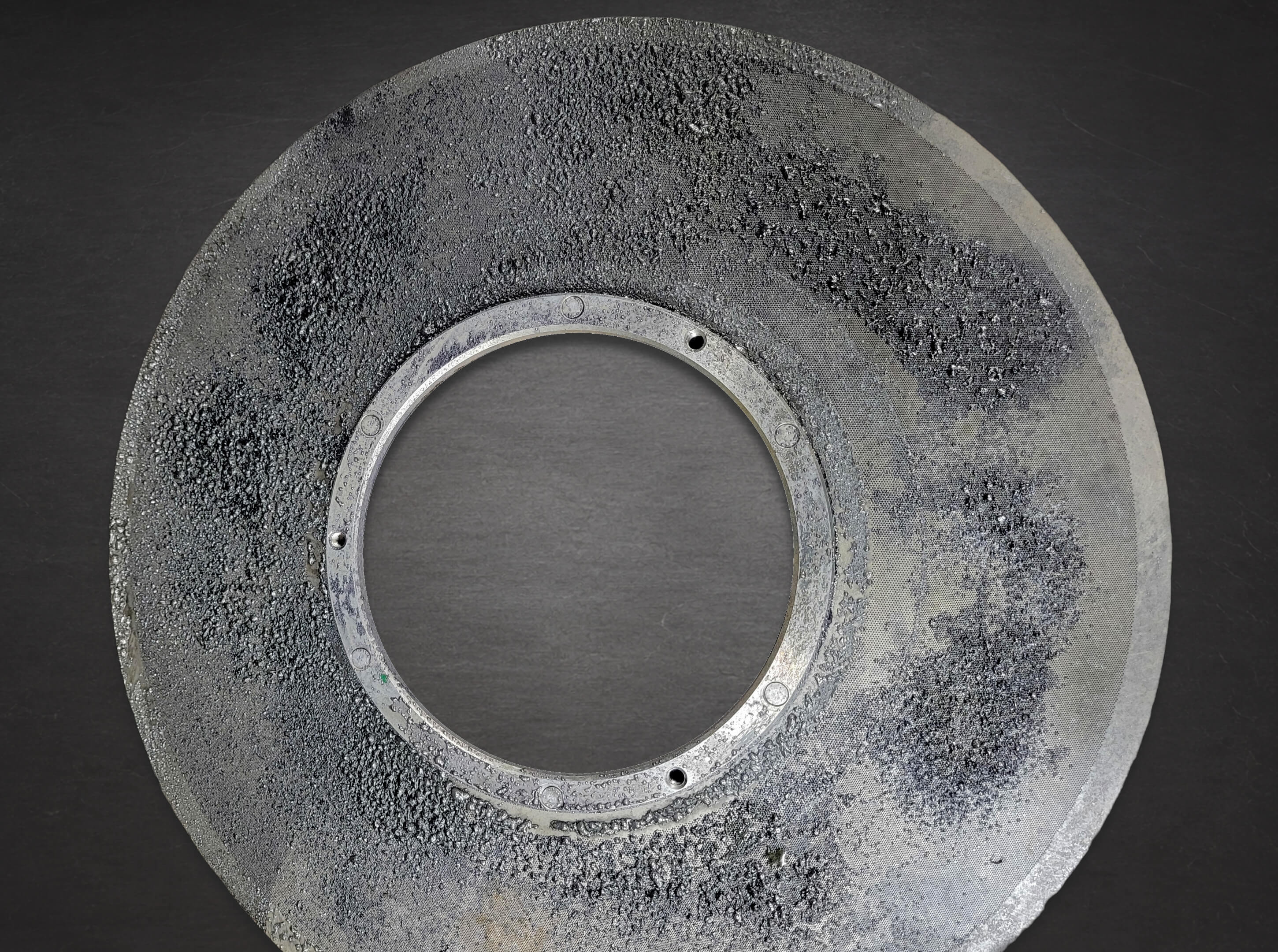
Laser Cleaning in Action
During the laser cleaning process, a cosmetic surface pattern may become visible on the stainless substrate. This appearance is a normal result of the pulsed laser cleaning process and does not represent damage, material loss, or degradation of the stainless-steel surface.
STAGE 2: Dry Ice Blasting
Following laser cleaning, the filters were processed using dry ice blasting with micro-particle media at approximately 53 PSI.
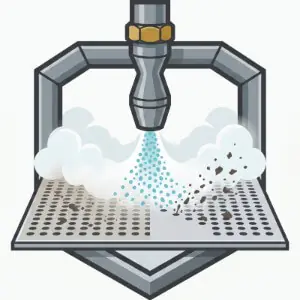
Dry ice blasting utilizes recycled CO₂ particles accelerated by compressed air to remove contamination from surfaces. Because dry ice sublimates upon impact, no secondary blasting media remains after cleaning.
The dry ice process was used to:
- Remove loosened contamination from filter surfaces
- Penetrate areas between filter layers
- Remove debris from difficult-to-access locations
- Reduce residual contamination without introducing water or chemicals
Results
Merritt Industrial successfully removed visible surface corrosion and contamination from both sides of the stainless-steel filter assemblies.
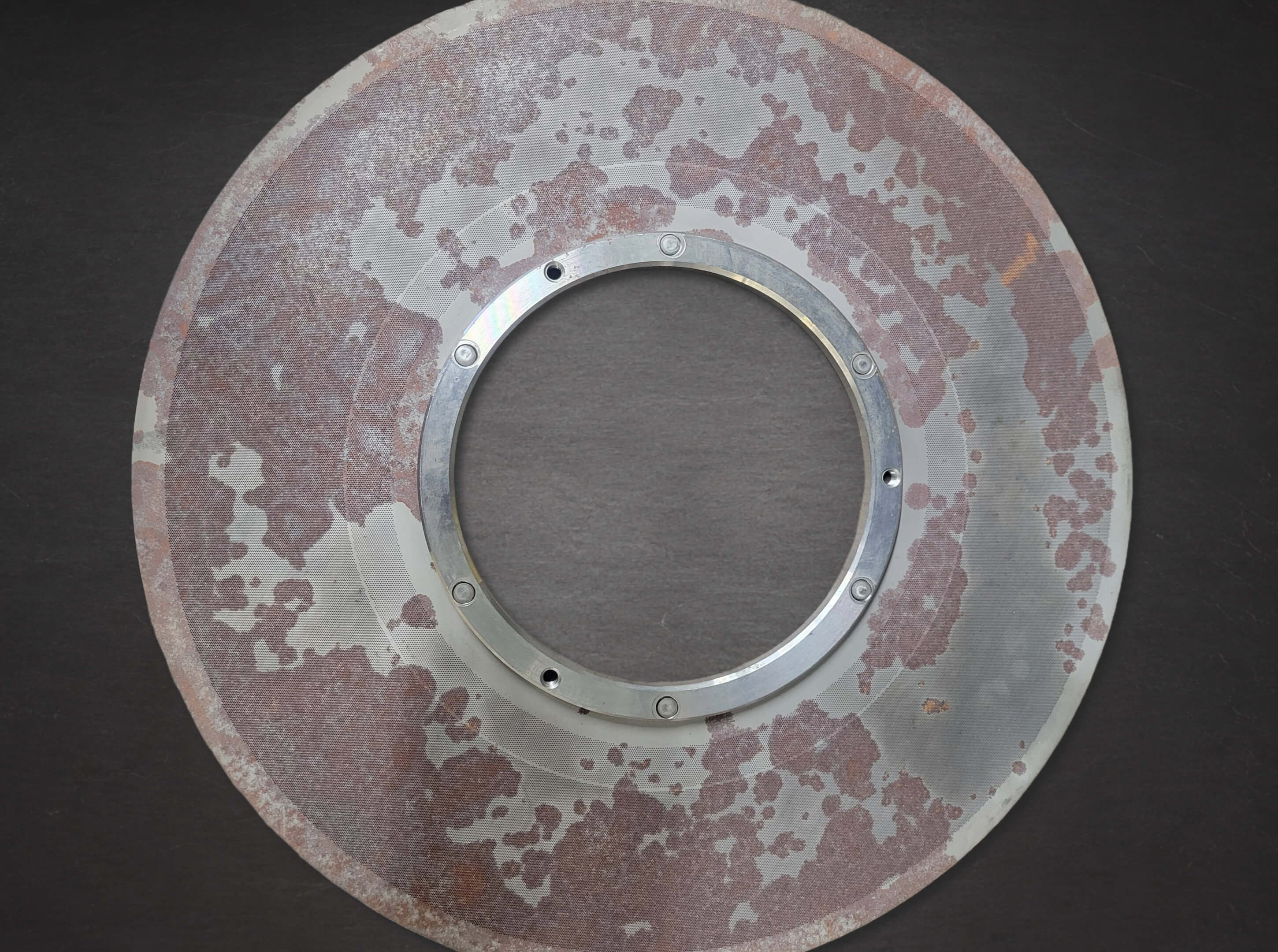
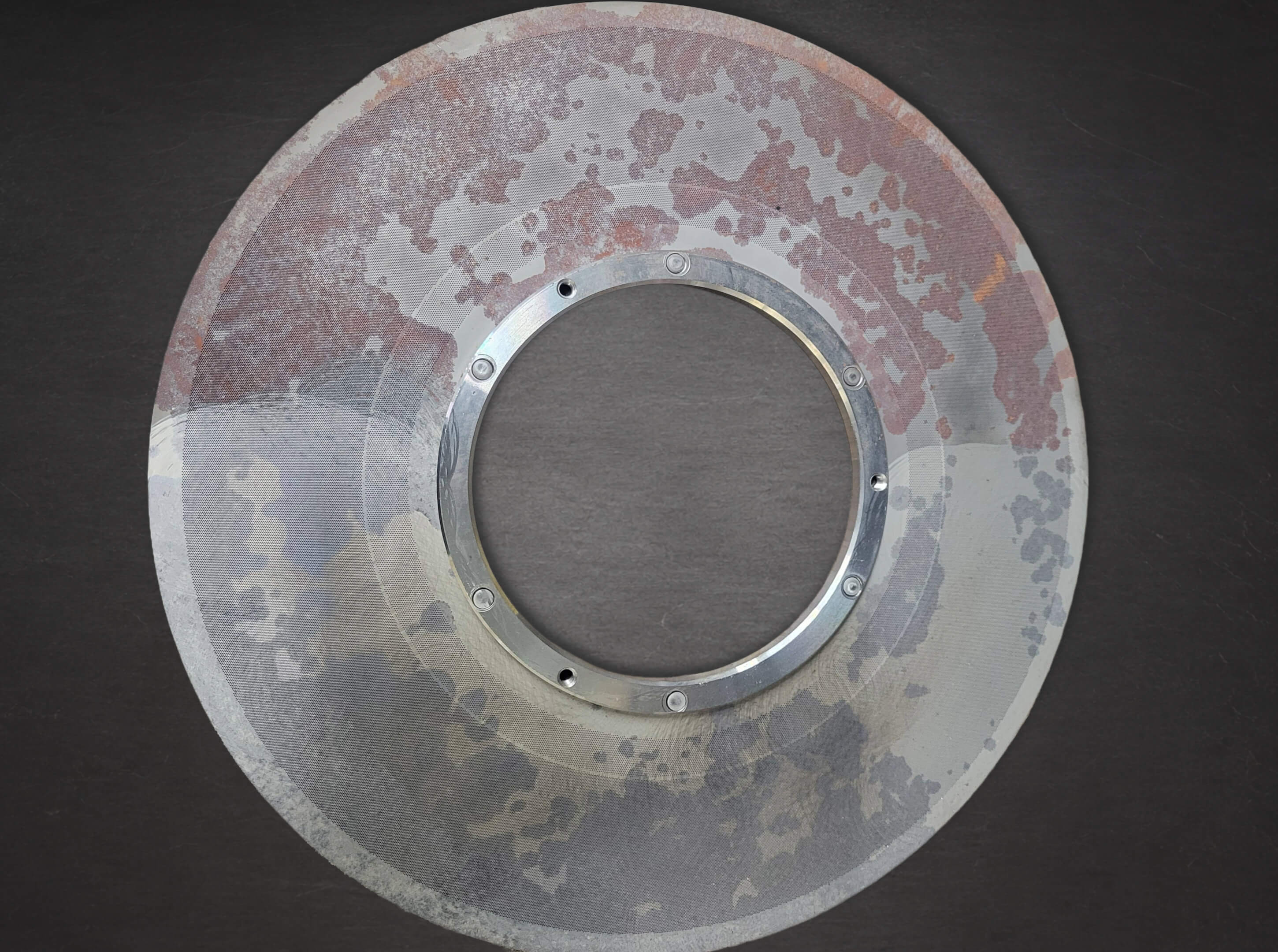
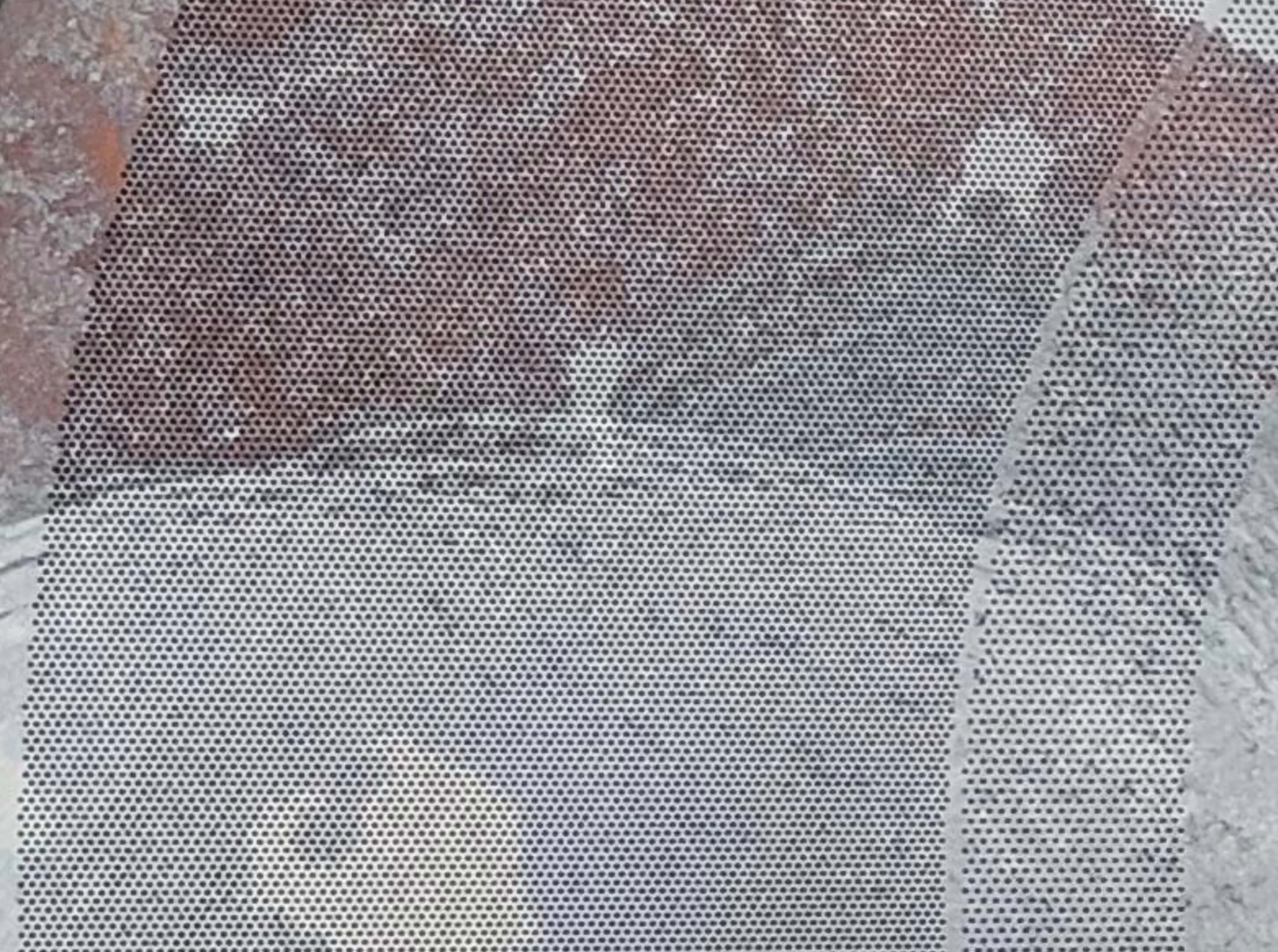
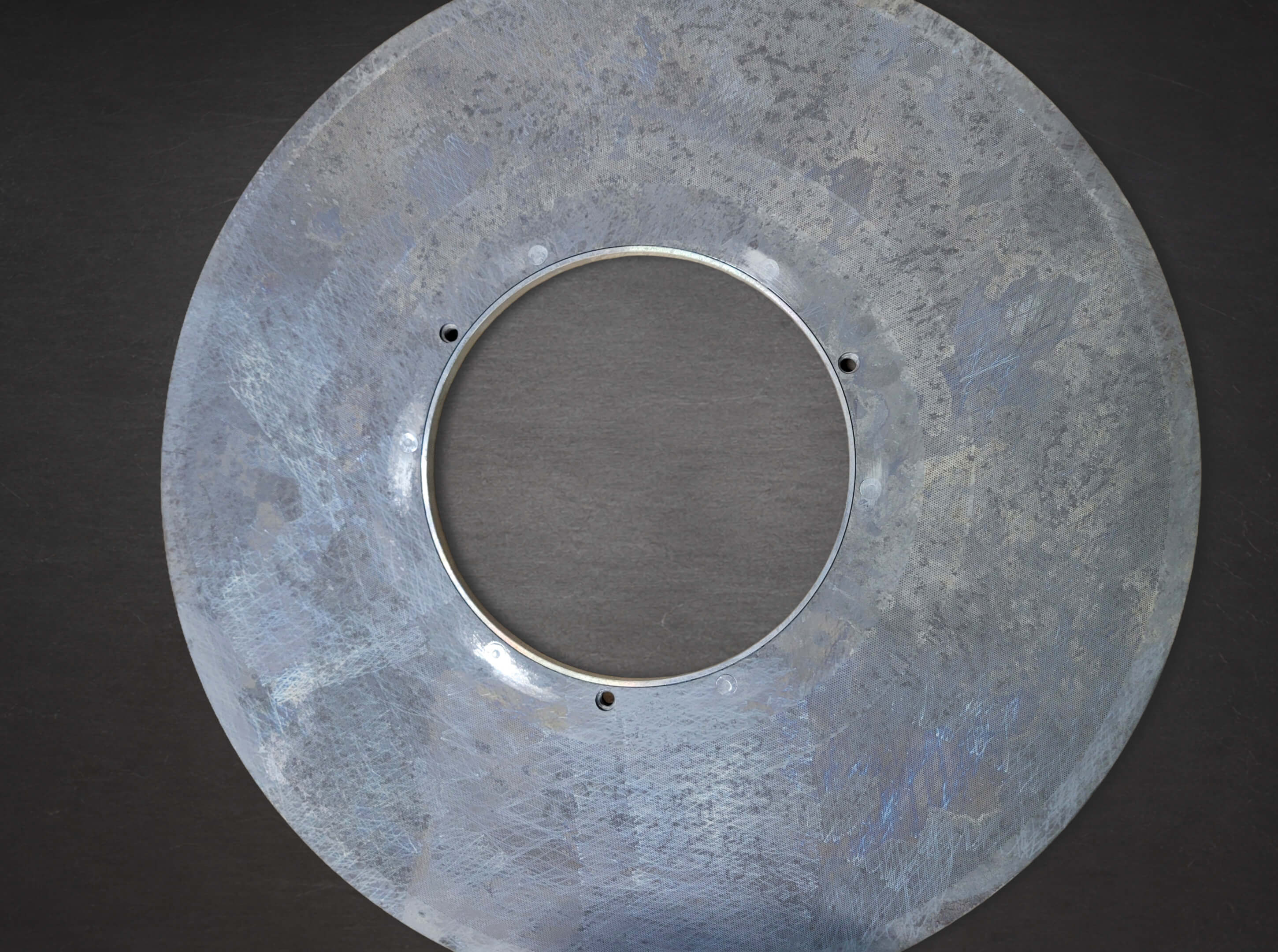
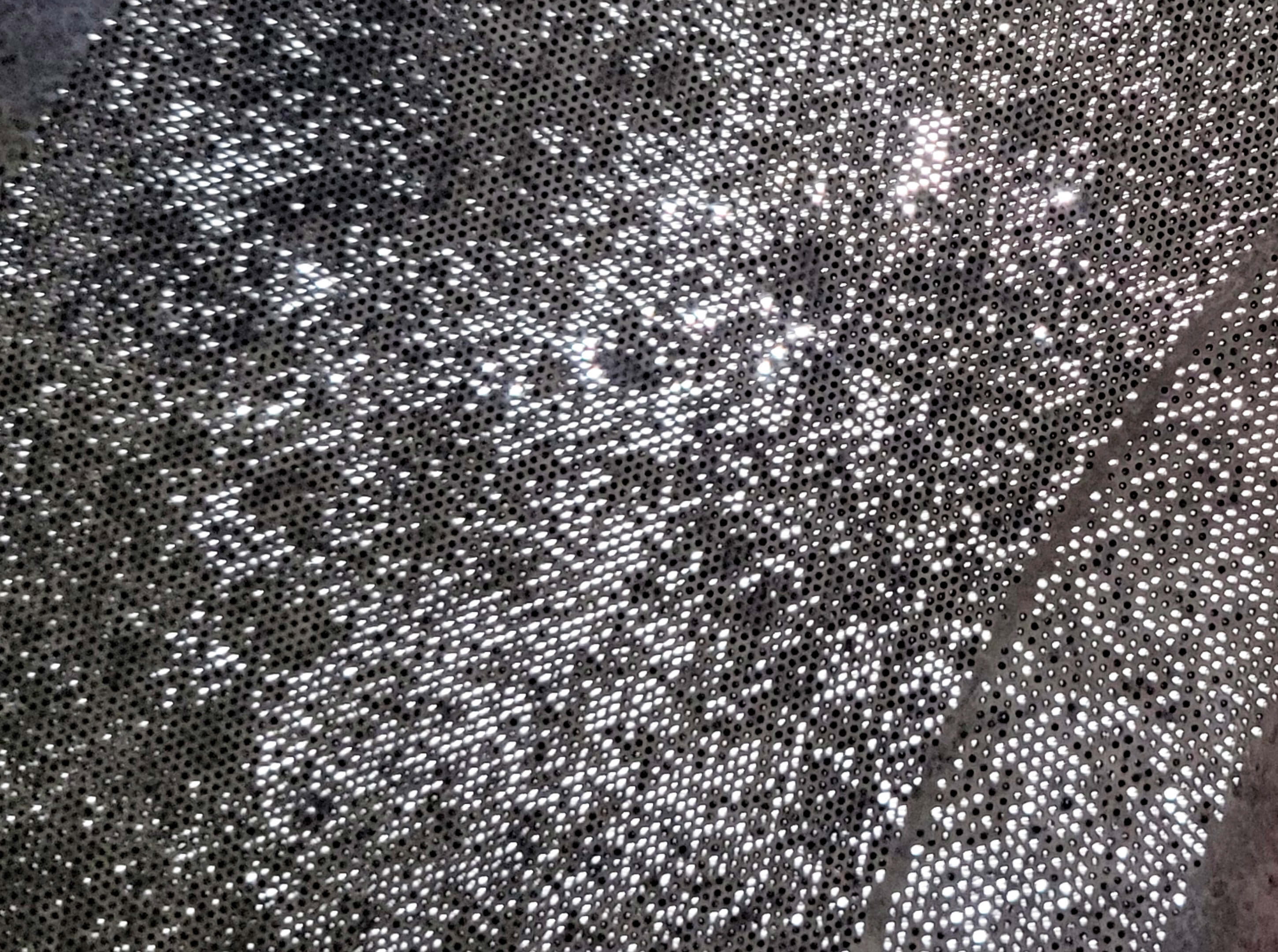
Some embedded contamination remained inside the filter media
While the cleaning process significantly improved the overall condition of the filters, some contamination appears to remain embedded within portions of the filter media structure when viewed under direct light. Due to the multi-layer construction of the filters, certain contamination may remain trapped between internal layers that cannot be fully accessed through non-destructive cleaning methods.
Overall, the filters exhibited a substantial improvement in appearance and cleanliness following processing.
Final Processing
Upon completion of cleaning operations:
- Filters were wiped down and treated with WD-40® to provide temporary corrosion protection during handling and shipment.
- All filters were carefully packaged in the original shipping container.
- The completed filters were returned to Heath Sellers of Innovative Recycling Solutions.
Comparison of Cleaning Options for Stainless Steel Filter Media
| Evaluation Criteria | Merritt Dual-Process | Sand/Bead Blasting | Chemical Bath |
|---|---|---|---|
| Substrate Material Preservation | High | Lower | High |
| Secondary Waste / Residue Risk | Zero | High — spent abrasive media | High — liquid chemical waste |
| Liquid/Moisture Introduced | None | Possible / Moderate | High |
| Localized Precision Cleaning | Very High | Moderate to High | Low |
Conclusion
Merritt Industrial’s combination of precision laser cleaning and dry ice blasting provided an effective, non-destructive approach for reducing corrosion contamination on sensitive stainless steel filter assemblies.
This process allowed for significant removal of visible oxidation and debris while maintaining the integrity of the filter media and supporting components. The project demonstrates the effectiveness of combining advanced cleaning technologies when conventional abrasive or chemical cleaning methods may pose a risk to sensitive substrates.
Merritt Industrial appreciates the opportunity to support Innovative Recycling Solutions and remains available for future cleaning, restoration, and contamination removal projects.
Need to Clean or Restore Industrial Filters?
Merritt Industrial can evaluate your filter assemblies, contamination level, and cleaning requirements to recommend the right non-destructive cleaning process.
- Request a Fixed-Cost SLA: Lock in predictable spend and recurring results.
Serving: Charlotte • Concord • Gastonia • Rock Hill • Mooresville • Greater Carolinas
Contact Merritt Industrial — Get a plan, schedule, and fixed cost for your cleaning needs. Call Today!