
How Fast-Response Dry Ice Blasting
Kept 21 Flange Couplings
on Schedule in Charlotte, NC
Project Overview
When flash rust forms on freshly quenched parts, every hour they sit is an hour the machining schedule slips. That was the situation at Jim Myers & Sons (JMS) in Charlotte, North Carolina. Twenty-one heat-treated flange couplings had developed flash rust and needed to be cleaned before they could move to the next machining step.
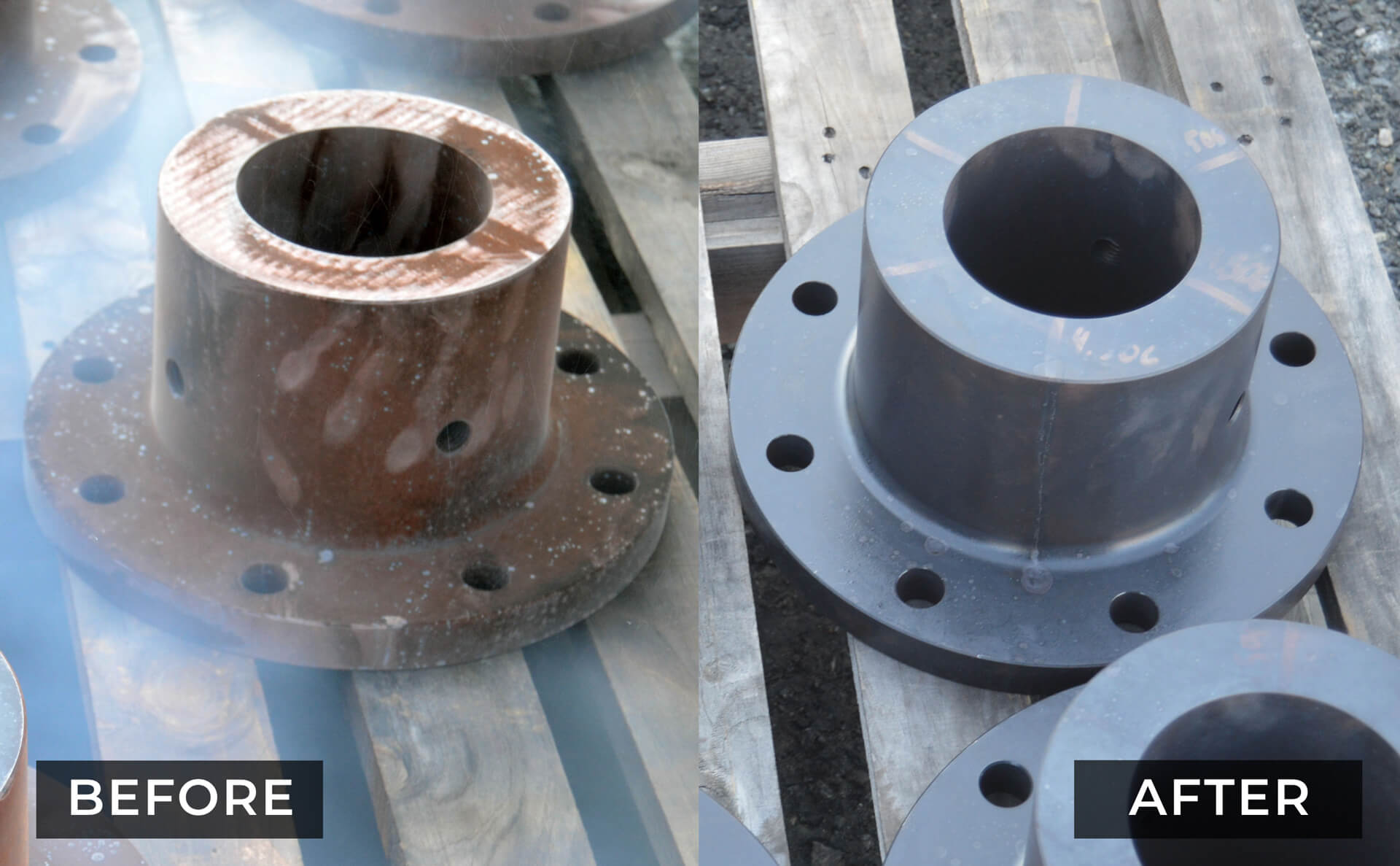
Merritt Industrial mobilized to the JMS facility with a dry ice blasting crew. We cleaned all 21 parts to client specification, removing the flash rust down to the quench oxide without touching the base material, and finished in half the time quoted. The parts went to machining ahead of schedule, and the job cost JMS less than planned.
While most of our jobs are larger scale, small jobs like this are great examples of how dry ice blasting for rust removal works in a production setting, and why fast response, the right method and good preparation matter as much as the blasting itself.
At a glance
- Client: Jim Myers & Sons, Charlotte, NC
- Parts: 21 quenched steel flange couplings
- Problem: Flash rust after the quench process, blocking the next machining step
- Specification: Cleaned to client specification, removing flash rust down to the quench oxide
- Method: Dry ice blasting with two Cold Jet Aero40 machines and Merritt’s in-house designed air management system
- Ice used: >500 lbs
- Result: Approved by the JMS lead engineer, finished in half the quoted time
The Client and the Challenge: Flash Rust Between Heat Treatment and Machining
Jim Myers & Sons has designed and manufactured water and wastewater solids-handling equipment in Charlotte since 1962. Conveyors, hoppers, diverter valves and slide gates are fabricated, machined and tested in its 72,000 sq. ft. facility.
JMS engineering staff already knew Merritt Industrial from an earlier laser cleaning project, so when this rust problem came up, they called us first.
Flash Rust on Flange Couplings in Charlotte’s Humid Climate
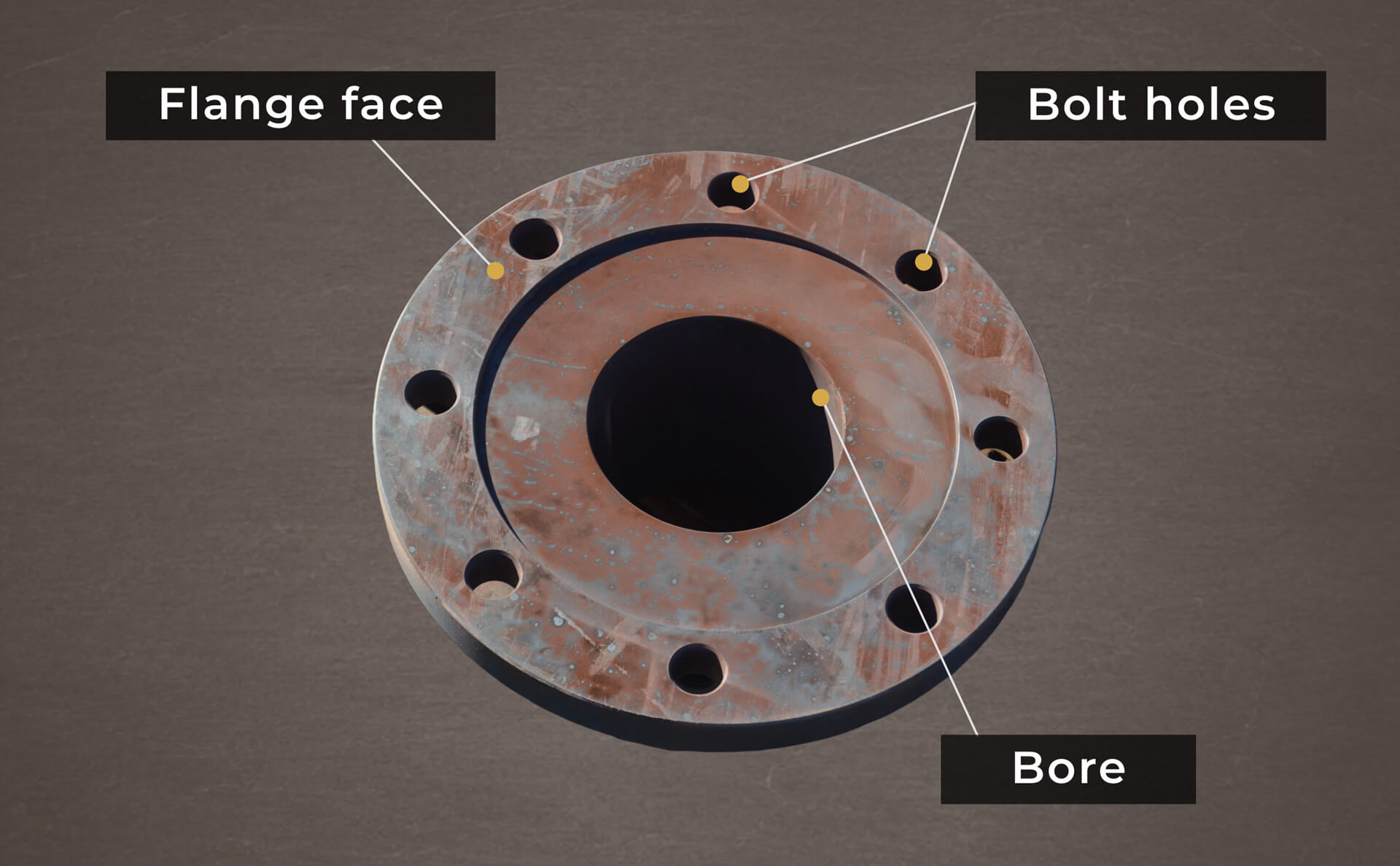
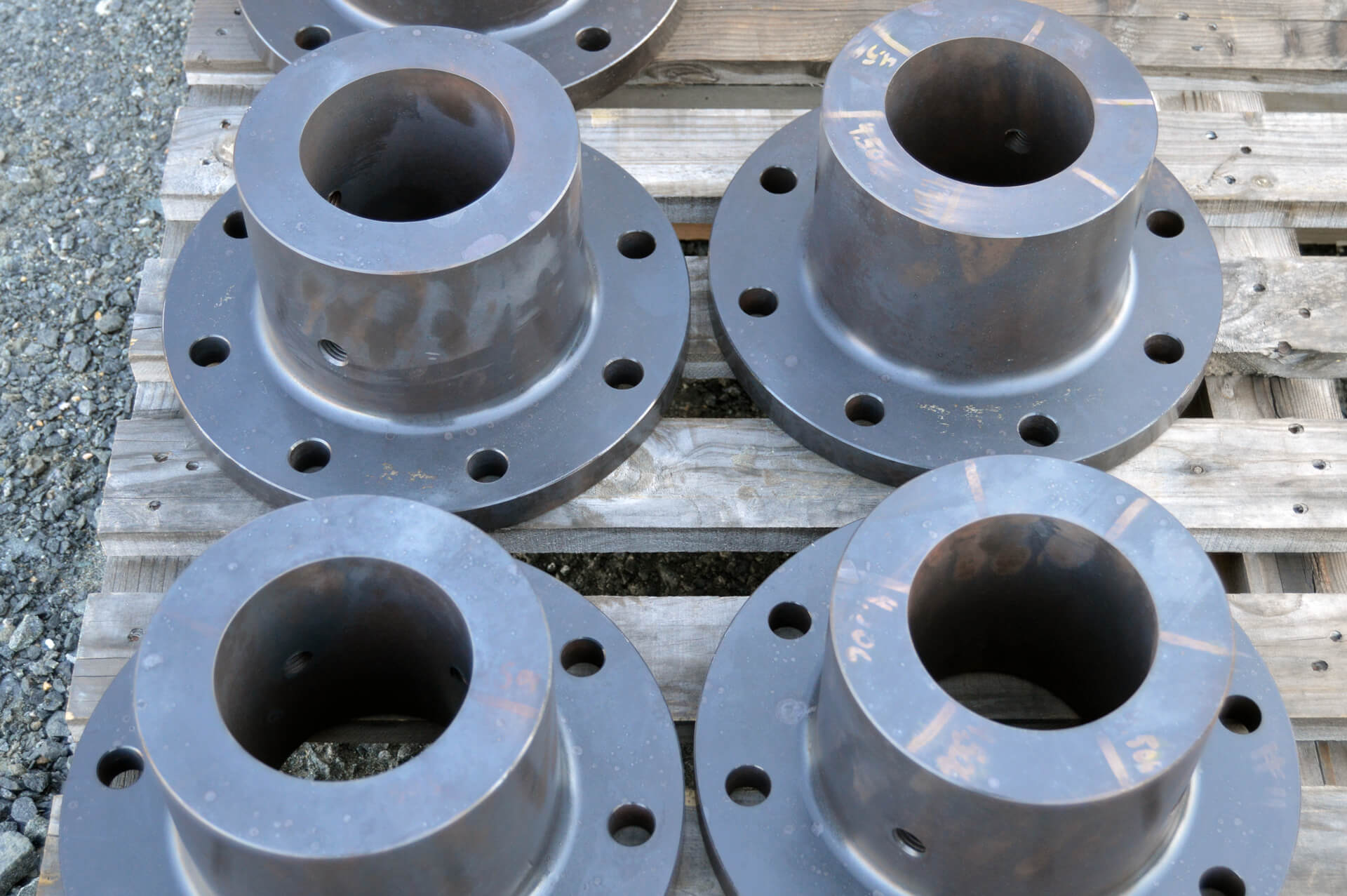
The parts were flange couplings: thick-walled steel hubs with a bolted flange at the base. After quenching, a thin, uneven layer of flash rust had formed across the flange faces, hub ends and bores. Flash rust is common on bare steel after heat treatment or water exposure. It can form within hours when humidity is high, which is most of the year in the Carolinas.
The rust had to come off before machining. If left on, it can affect fixturing, measurements, cutting tools and any coating applied later.
But the cleaning had a strict limit. JMS needed the flash rust gone without removing metal beyond the oxide layer from the quench process. Machining allowances were already set, so an aggressive method could take off material the parts could not spare.
That combination of tight timing, a clean surface and no material loss is what made this a job for dry ice blasting.
Why Dry Ice Blasting Instead of Media Blasting or Chemicals
There are three common ways to remove flash rust from steel parts in a manufacturing setting:
- abrasive media blasting,
- chemical rust removal
- and dry ice blasting.
For these flange couplings, dry ice blasting was the only one that met every requirement.
| Requirement | Abrasive media blasting | Chemical rust removal | Dry ice blasting |
| Removes flash rust | Yes | Yes | Yes |
| No removal of base metal | No, it cuts into the surface | Depends on the chemical and how long it stays on | Yes, non-abrasive |
| No secondary waste | No, spent media must be collected | No, rinse water and residue need treatment | Yes, the ice turns to gas |
| No residue in bolt holes, threads or bores | No, grit lodges in features | No, needs rinsing and drying | Yes |
| Parts ready for machining right away | No, they need cleanup | No, they need neutralizing and drying | Yes |
How dry ice blasting works
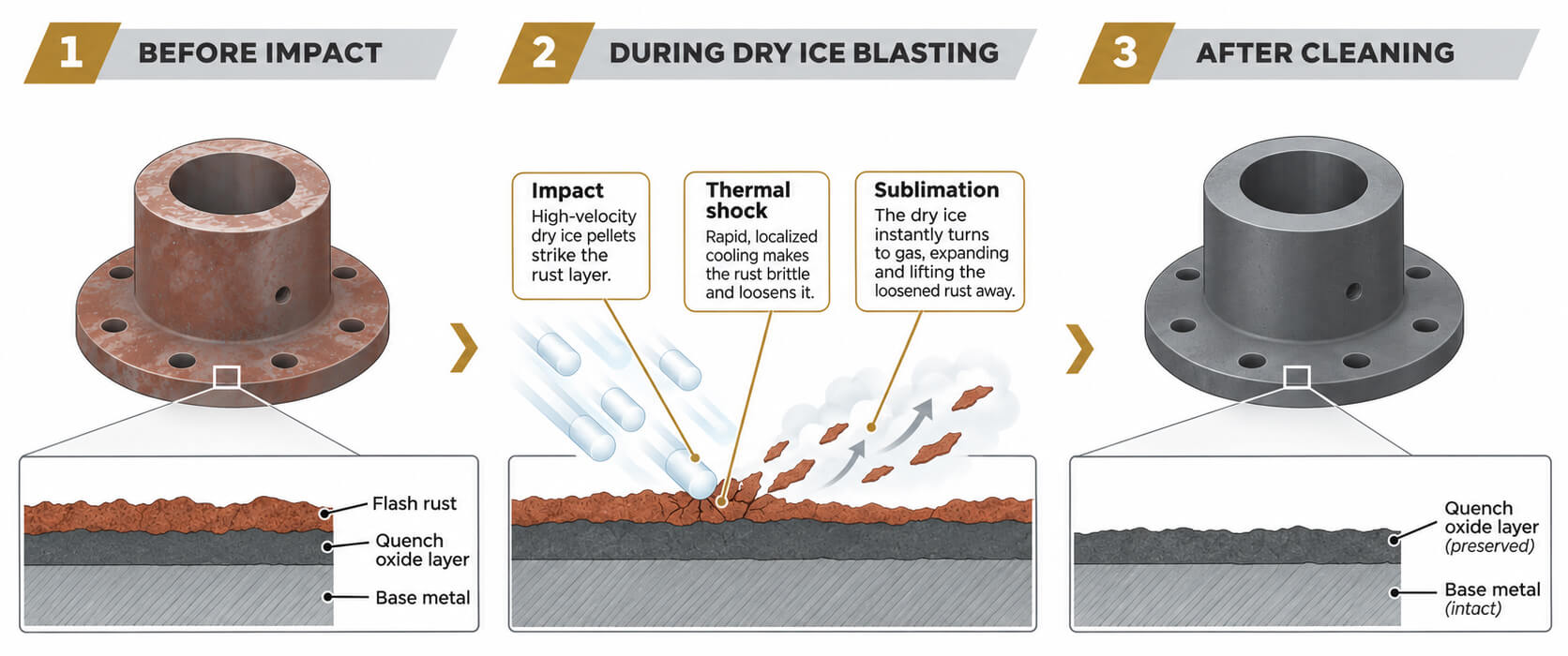
Pellets of solid carbon dioxide are fired at the surface with compressed air. Three things happen on impact. The pellets hit the rust layer, the extreme cold makes the rust shrink and crack away from the steel, and the pellets turn to gas, lifting the loosened rust off. The ice itself is softer than steel, so it removes the contaminant and leaves the base metal in place.
Why that mattered here
With media blasting, grit removes some base metal and can embed in the surface. It also lodges in bolt holes and bores, which then have to be cleaned out before machining.
Chemical rust removers create a liquid waste stream and need to be neutralized, rinsed and dried. Wet steel is exactly what causes flash rust in the first place.
Dry ice blasting left nothing behind but clean parts and the rust that came off them. That is why it is often the best choice for surface cleaning in manufacturing, where parts go straight back into production.
Mobilization:
The Right Equipment, Sized for the Job
Once JMS confirmed the scope, Merritt Industrial mobilized a crew with:
- Two Cold Jet Aero40 dry ice blasting machines, so two technicians could blast at the same time
- Merritt’s air management system, which we designed in-house to supply cool, dry blasting air
- >500 lbs of dry ice, enough for the full scope with margin to spare
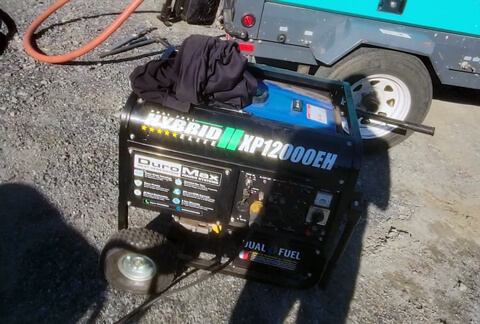
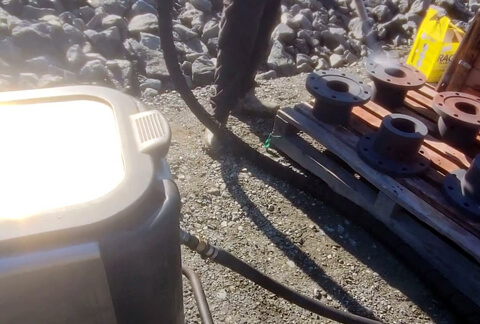
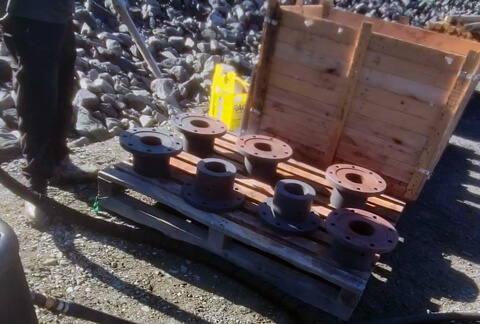
Why air quality matters for rust removal
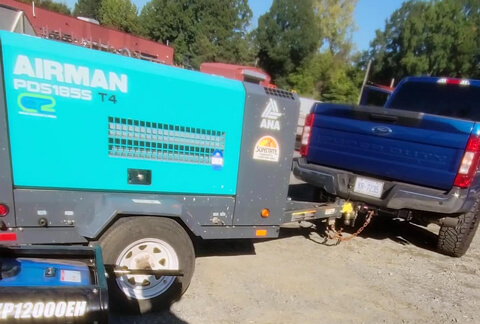
Dry ice blasting needs a large volume of compressed air. On many job sites, that air comes from a diesel compressor, which delivers hot, moisture-laden air.
Two Problems Caused by Hot, Moist Compressed Air
- First, dry ice chills the steel as it cleans. When moist air meets a cold surface below its dew point, water condenses on the part. On bare steel, that water can start new flash rust on a surface you just cleaned.
- Second, hot air works against the ice and can reduce cleaning efficiency.
Our air management system addresses both problems
It conditions the air before it reaches the blast hose, lowering its temperature and its dew point. Freshly cleaned parts stay dry, and the ice does its work more effectively.
We built this system after years of studying how air conditions affect results on real jobsites, and it goes with our crews to every dry ice blasting job.
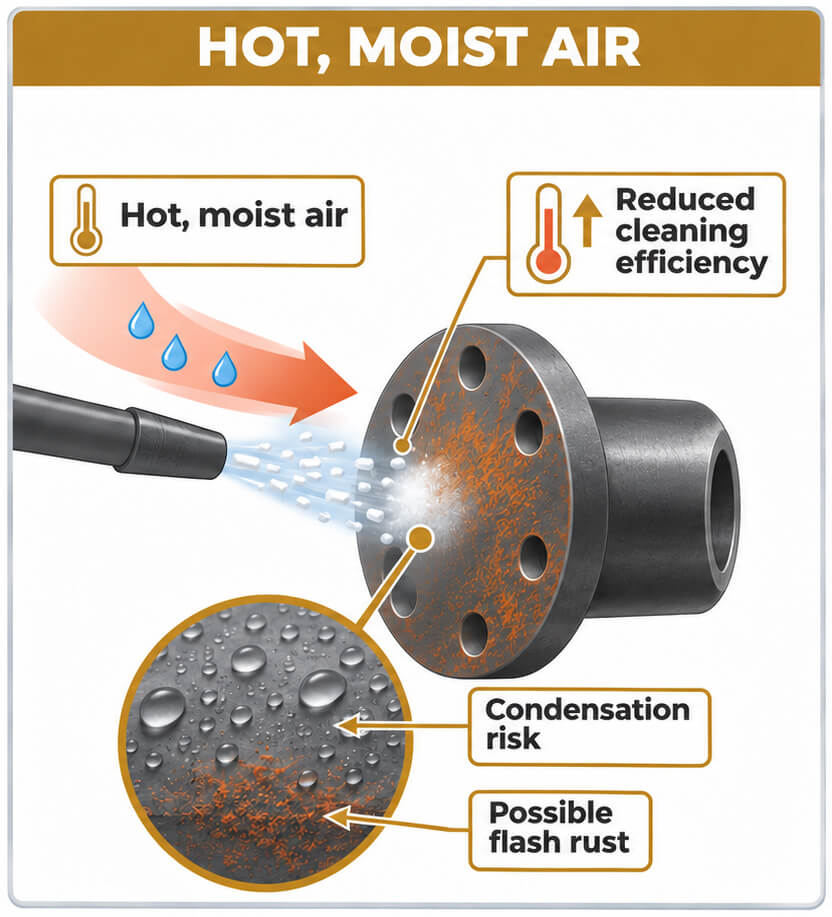
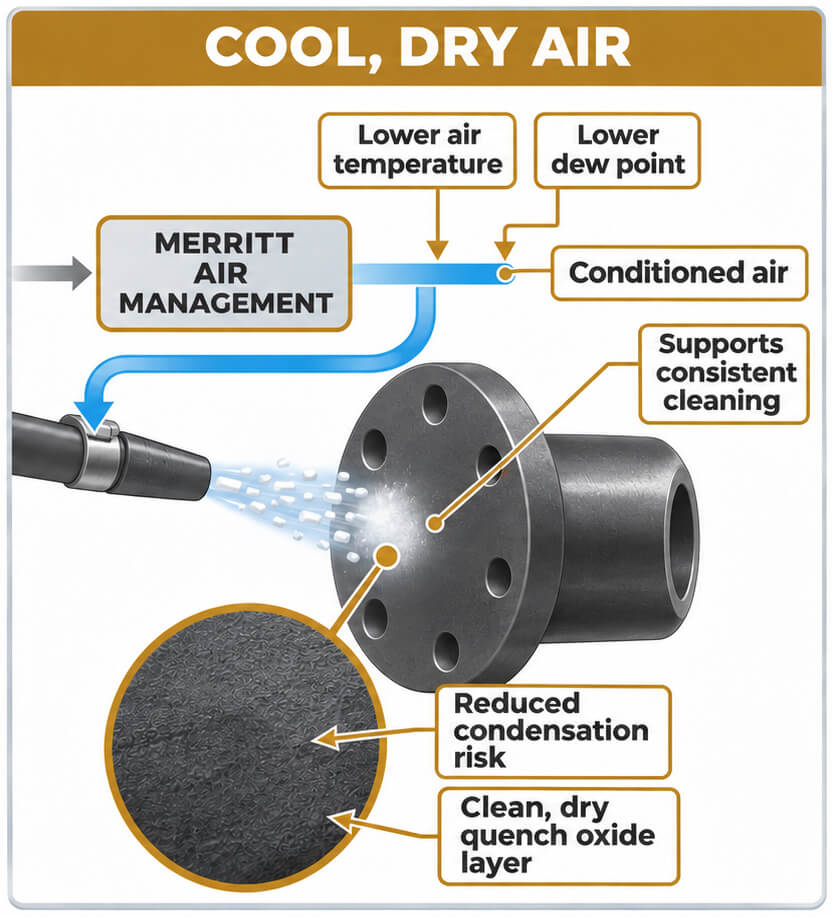
Illustrative comparison of how compressed-air conditions can affect condensation risk and dry ice blasting performance.
A setup that stayed out of the way. Setup was quick and did not interrupt the JMS staff or the work around us. JMS dropped the parts with a forklift in the staging area, and our technicians took it from there.
The Work: Document, Stage, Blast, Verify
- Document the starting condition. Before any blasting, our technicians photographed and recorded the condition of the parts. That record shows the client where the work started and gives everyone a shared reference at sign-off.
- Stage the parts for access. The couplings were laid out on pallets with space between them, so each flange face, hub, bore and bolt hole could be reached without repeated handling.
- Blast with two machines. Two technicians worked in parallel with the Aero40 units, removing the flash rust down to the quench oxide layer. Because dry ice blasting is non-abrasive, they could work the bolt holes, inside diameters and edges without rounding features or leaving media behind.
- Inspect against the spec. Each part was checked against the client’s cleanliness requirement before it was called complete.
Dry Ice in Action
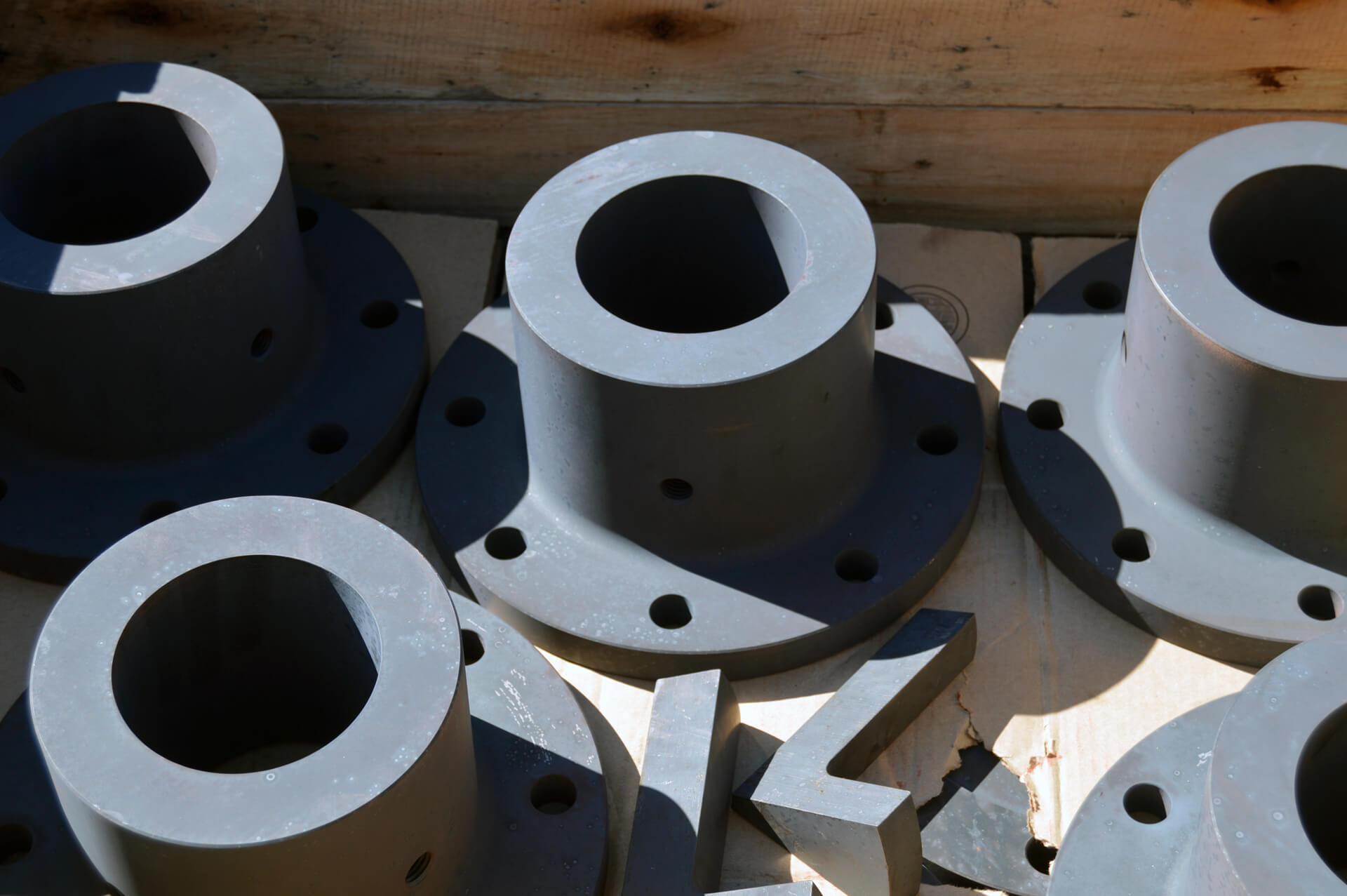
The before and after photos show the difference. The reddish-brown flash rust is gone, and the dark, even finish of the quenched steel is left in place.
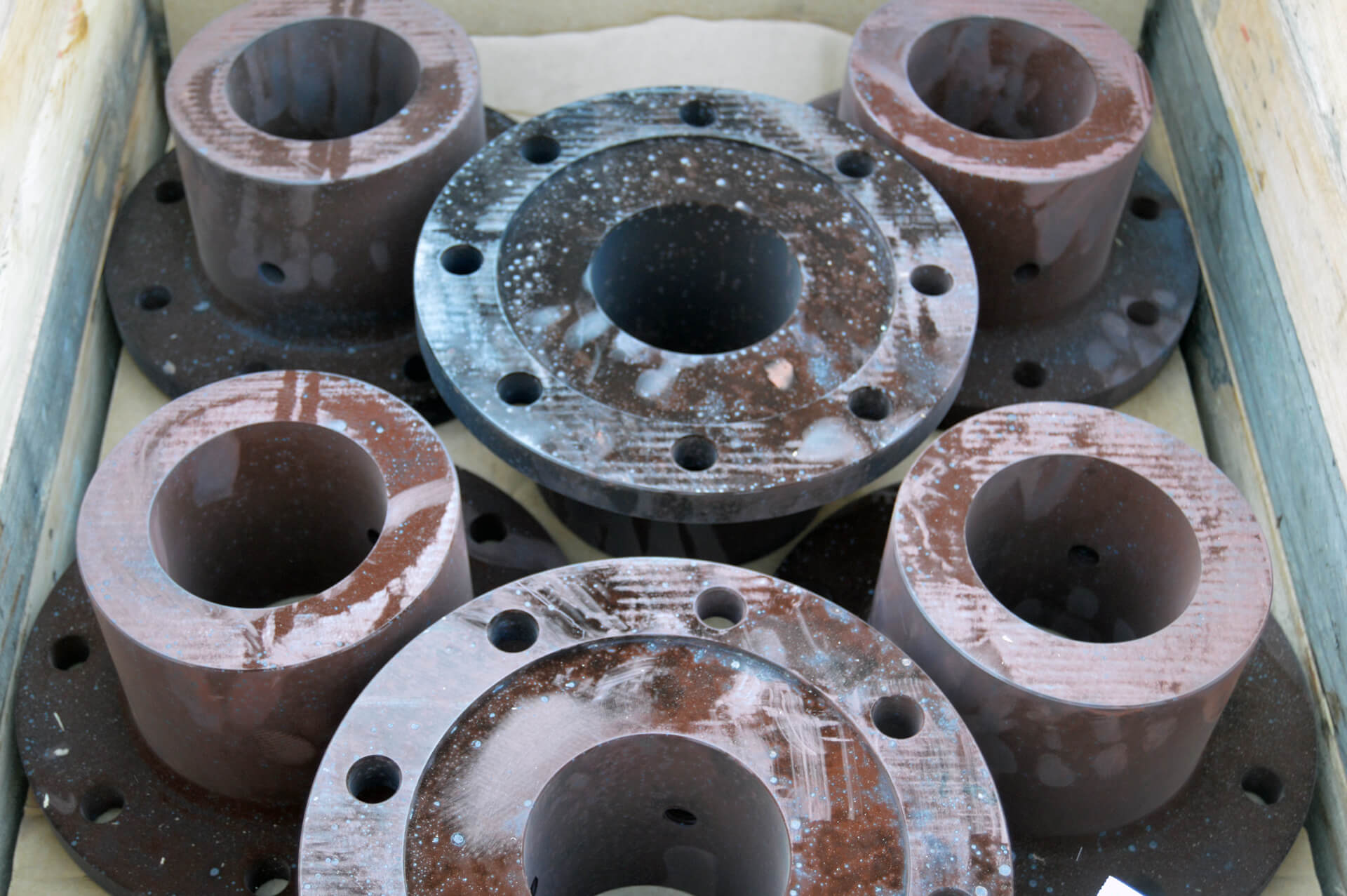
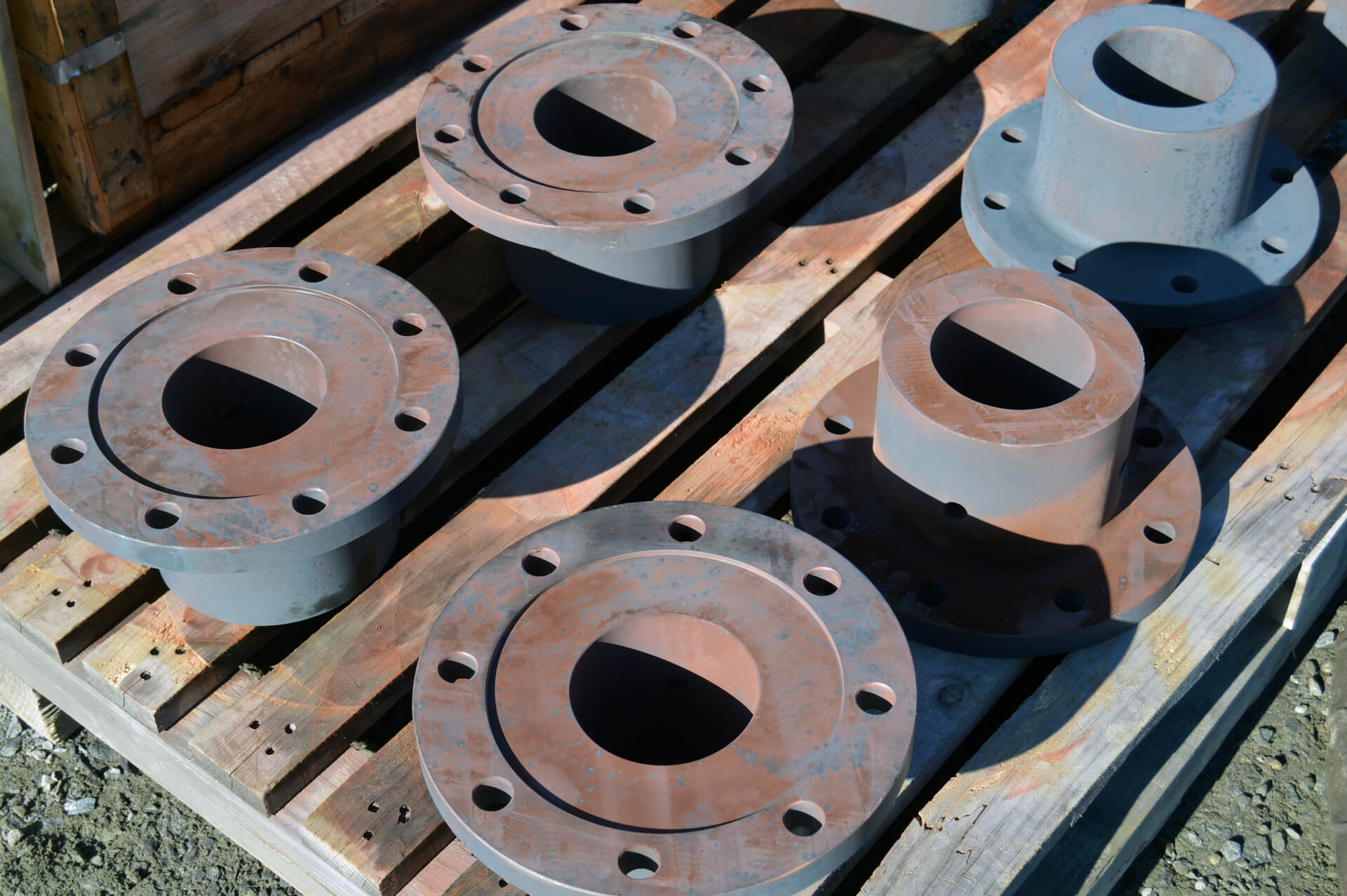
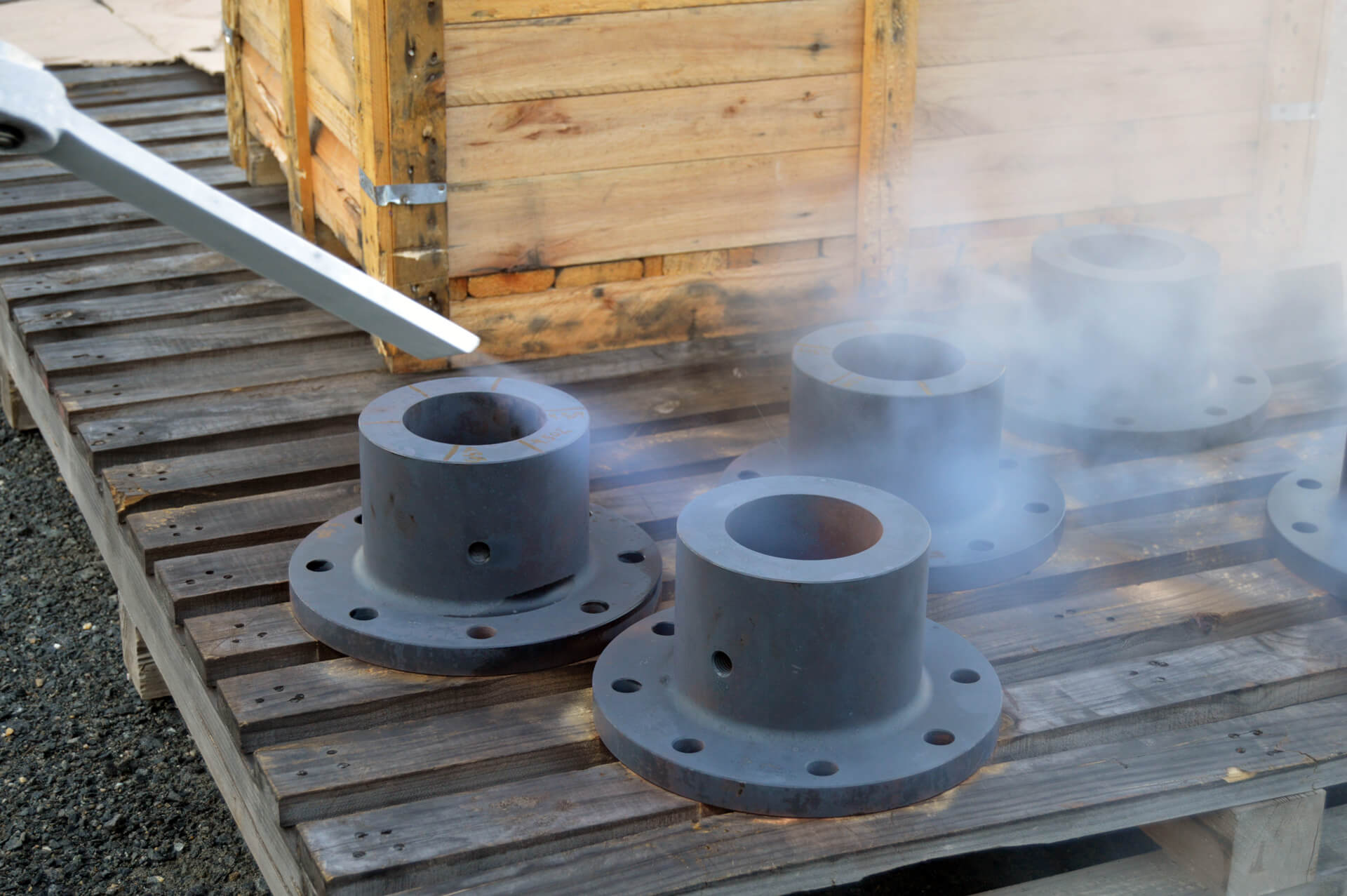
No cleanup after the cleaning.
Dry ice blasting produces no secondary waste. The pellets turn into carbon dioxide gas on impact, so there was no spent grit to sweep up and no chemical residue to collect or dispose of. The only material left was the small amount of rust removed from the parts. Our work area needed no extra cleaning, and the JMS floor was left as we found it.
Results: Done in Half the Quoted Time
All 21 flange couplings were cleaned to client specification, with the flash rust removed down to the quench oxide. The JMS lead in-house engineer inspected the parts and signed off before we called the job complete.
Merritt and JMS had agreed on a full day of blasting. Our technicians finished in about half that time. Several things made that possible:
- Planning before arrival. Scope, part count, access and specification were settled before the crew left the shop.
- Equipment matched to the job. Two machines running in parallel, with conditioned air, kept cleaning rates high and avoided re-rusting.
- Experienced technicians. Our crew knows how to set pressure, ice feed and stand-off distance to remove rust without damaging the surface underneath.
- Clear communication with the client. The JMS engineering team knew the plan, the spec and the sign-off process from the start.
For JMS, finishing early meant two things. The job cost less than quoted, and the couplings moved to the next stage of manufacturing sooner than expected.
More Than
a Blasting Contractor
Merritt Industrial is not just a blasting, cleaning or rust removal contractor.
We are a solutions provider. We have spent years studying and refining our methods and our equipment, and we bring what we learn to every jobsite.
Our manufacturing partners rely on us to choose the right method, show up prepared and deliver work that passes their own inspection the first time.
Dry Ice Blasting and Laser Cleaning Across the Southeast
Merritt Industrial provides mobile industrial cleaning and rust removal for manufacturers across the Southeast. Our crews serve plants and shops throughout:
- North Carolina: Charlotte, Raleigh-Durham, Greensboro, Winston-Salem and the Piedmont manufacturing corridor
- South Carolina: Greenville-Spartanburg, Rock Hill, Columbia and Charleston
- Virginia: Richmond, Roanoke, Lynchburg and Southside Virginia
- Georgia: Atlanta and manufacturing centers across the state
- Tennessee: Knoxville, Chattanooga, Nashville and the Tri-Cities
The humid climate across this region makes flash rust a constant issue for manufacturers that heat treat, machine, store or ship bare steel. Fast, non-abrasive rust removal keeps those parts moving.
Two non-abrasive cleaning methods, one partner
JMS first worked with us on a laser cleaning project, and this job needed dry ice blasting. We offer both, so we recommend the method that fits the part rather than the one we happen to own.
- Dry ice blasting is fast on larger parts and surfaces, removes rust, paint, grease, release agents and production buildup, and leaves no secondary waste. It is well suited to equipment that can be cleaned in place.
- Laser cleaning is precise, controllable and well suited to selective rust or oxide removal, weld preparation and detailed areas where tight control matters.
Common dry ice blasting and laser cleaning applications in manufacturing include flash rust removal before machining, surface preparation before coating or welding, mold and tooling cleaning, production equipment cleaning, and restoring parts that sat in storage.
Frequently Asked Questions
About Dry Ice Blasting for Rust Removal
Yes. Dry ice blasting removes flash rust and light surface rust from steel well. The pellets crack and lift the rust layer through impact and extreme cold, then turn into gas. Heavy, pitted corrosion may need a different method or a combined approach.
No. Dry ice is softer than steel and is non-abrasive, so it removes rust and contaminants without removing base metal. That makes it a good fit for machined parts, sealing surfaces and parts with tight tolerances.
It depends on the goal. Sandblasting and other abrasive media remove base metal and create a surface profile for coatings, but they leave spent media that must be cleaned up. Dry ice blasting is the better choice when you need rust removed without material loss, without media lodged in holes and threads, and without cleanup afterward.
Flash rust is a thin layer of rust that forms quickly on bare steel when it is exposed to moisture. It is common after quenching, washing or storage in humid conditions. In the Southeast’s humid climate, it can form within hours.
Control the air. Dry ice cools the steel, and moist compressed air can condense on the cold surface and start new rust. Merritt Industrial uses an air management system that delivers cool, dry air and lowers the dew point, so cleaned parts stay dry.
It creates no secondary waste. The dry ice turns into carbon dioxide gas on impact. The only material left is the rust or contaminant removed from the part.
Both are non-abrasive. Dry ice blasting is faster on larger surfaces and general production cleaning. Laser cleaning offers precise, selective removal of rust and oxides on detailed areas. Merritt Industrial offers both and recommends the method that fits the part.
Merritt Industrial provides mobile dry ice blasting, laser cleaning and rust removal for manufacturers in North Carolina, South Carolina, Virginia, Georgia and Tennessee.
Need Fast Rust Removal
That Keeps Production Moving?
Flash rust shouldn’t hold up your machining schedule. Merritt Industrial responds quickly with the right method, the right equipment and a crew that works around your production.
Whether you need dry ice blasting, laser cleaning or help choosing between them, contact Merritt Industrial to discuss your parts, your specifications and your timeline.
We serve manufacturers across North Carolina, South Carolina, Virginia, Georgia and Tennessee.